

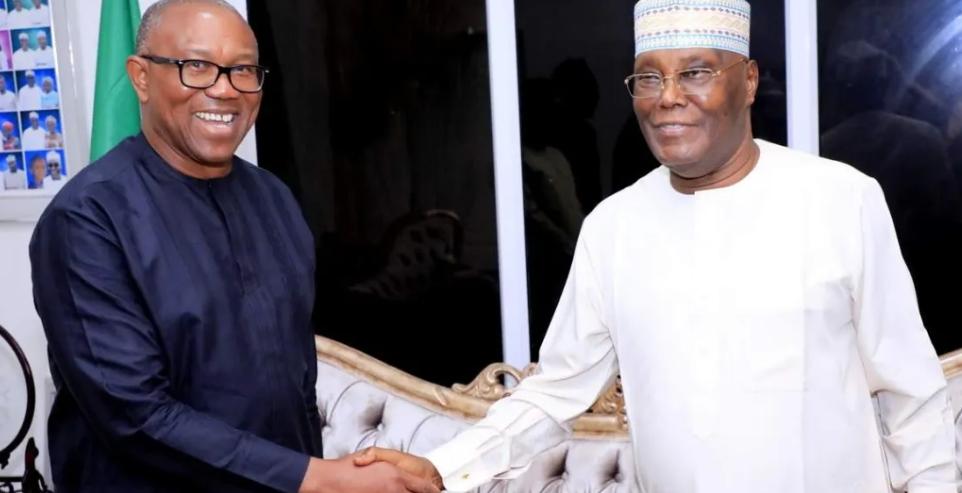
As the countdown to the 2027 general elections begins, the Nigerian political landscape is witnessing a seismic shift. A high-stakes “Third Force” mega-coalition has emerged under the banner of the African Democratic Congress (ADC), aiming to dismantle the ruling All Progressives Congress (APC) hegemony.
In a historic alignment, the top three challengers from the 2023 cycle Atiku Abubakar (PDP), Peter Obi (Labour Party), and Rabiu Kwankwaso (NNPP) have effectively collapsed their structures into the ADC. They are joined by a formidable defectors like Rotimi Amaechi, the 2022 APC primary runner-up, who has exited the ruling party with the explicit mission to unseat his former ally, President Bola Tinubu.
The most significant tactical evolution in this cycle is the ADC’s internal primary structure. Leveraging provisions in the Electoral Act 2026 and binding party resolutions, the ADC has instituted a “post-primary unity” agreement. Unlike previous years where losing aspirants would flee to alternate platforms, this “no-exit” clause legally and strategically compels these heavyweights to remain within the party and support the eventual flagbearer. This maneuver is specifically designed to prevent the fragmentation of opposition votes that arguably handed victory to the APC in 2023.
The ruling APC has not stayed idle. Allegations have surfaced that the government is attempting to implode the ADC from within. Central to this is Nafiu Bala Gombe, a former ADC deputy national chairman who has declared himself factional chairman.
Insiders allege Gombe received upwards of ₦2 billion to ignite leadership crises and tie the party up in litigation, this Gombe has denied. Despite the turmoil, an ADC national convention held on April 14, 2026, officially expelled Gombe and his associates, appointing former Senate President David Mark as interim leader. Opposition leaders claim the attempt to divide them has ironically “welded” the coalition closer together.
The political landscape of 2027 has evolved into a high-stakes chess match between the entrenched incumbency of the APC and the consolidated defiance of the ADC’s “mega-coalition.” This rivalry is best understood through a complex interplay of internal dynamics and external pressures that define both camps.
For the ADC, their primary strength lies in a staggering numerical foundation, a combined 2023 voter base of over 13 million. By bringing Atiku, Obi, Kwankwaso, and Amaechi under one roof, they have effectively bridged the regional divides of the North and South. This unity presents a rare opportunity to harvest the widespread public discontent rooted in record inflation and the fallout of fuel subsidy removals. Furthermore, the “Obidient” youth movement has transitioned from a spontaneous wave into a structured political engine. However, this powerhouse is shadowed by significant weaknesses, most notably the volatile “clash of egos” among four presidential-tier aspirants and the lingering legal sabotage orchestrated by the Nafiu Gombe faction. Their greatest threat remains systemic; if the courts or a hesitant INEC refuse to recognize their leadership, the coalition could be disqualified before the first ballot is cast.
Conversely, the APC enters the fray wielding the formidable strengths of incumbency, including control over state security and a massive financial advantage. They are looking toward an opportunity for redemption through late-term economic stabilization projects like the “Single Window” initiative and a streamlined cabinet of loyalists. Yet, the party is grappling with quiet but deep weaknesses, evidenced by the high-profile exits of former pillars like El-Rufai, Malami, and Aregbesola. These defections have hollowed out the party’s traditional grassroots strongholds. The threat to the Tinubu administration is what analysts call a “perfect storm”: a combination of rampant northern banditry and a unified opposition that is strategically positioned to deny the ruling party the constitutionally required 25% of the vote across 24 states.
Ultimately, the battle will be decided in the North-West and the South-South. While the government defends its reforms, the ADC is successfully weaponizing the economic “hardship” narrative, noting that the middle class is being crushed by exorbitant utility costs. If the ADC can maintain its “no-exit” pact and survive the Gombe-led legal onslaught, the APC faces an uphill struggle to maintain its grip on power.
The 2027 election will be fought in a nation gasping for air. While the government defends its reforms, Amaechi and the ADC are using the “4-million-naira electricity bill” as a rallying cry for both the poor and the elite.
The ultimate showdown will occur in the North-West (Kano and Kaduna) and the South-South (Rivers). In 2023, the split between Atiku and Kwankwaso in the North allowed the APC to slip through. If the ADC can consolidate these regions into a single voting bloc, the incumbent’s path to 25% becomes mathematically slim.
As the courts prepare to weigh in on the ADC’s leadership, the question remains: will the ruling party’s alleged strategy of internal sabotage succeed, or has the APC accidentally created its own greatest nightmare?
Fidelis Duker is a Filmmaker/Media Practitioner who writes from the creeks of Bakassi