

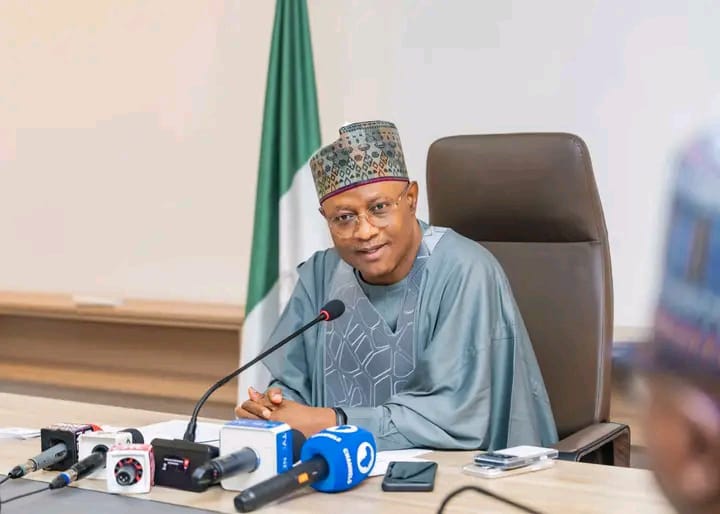
Kaduna State Governor Uba Sani has disclosed that the state government has identified 22,435 hectares of degraded land for restoration under the Agro-Climatic Resilience in Semi-Arid Landscapes (ACReSAL) project, signalling a significant push towards environmental sustainability and climate resilience.
The governor, who was represented by the Commissioner for Environment and Natural Resources, Abubakar Buba, made this known at the ACReSAL mid-term review meeting held in Kaduna.
He said the state leveraged advanced geospatial mapping technologies to accurately identify and delineate degraded areas, ensuring that restoration efforts are both targeted and effective.
According to him, the initiative is not only aimed at rehabilitating damaged ecosystems but also at enhancing agricultural productivity and improving livelihoods in affected communities.
Sani further revealed that the state government is complementing the restoration programme with livelihood support initiatives.
He noted that over 500 women, youths, and school feeding vendors have been trained in biomass briquette production as an alternative to firewood, a move he said is already reducing environmental pressure while creating income opportunities.
The governor also disclosed that more than 160 kilometres of drainage channels have been desilted to mitigate flooding and improve environmental conditions in urban centres.
He added that Kaduna State has developed a 10-year climate change policy designed to institutionalise sustainability and provide a framework for long-term environmental planning.
While calling for stronger collaboration among stakeholders, Sani stressed that collective effort is critical to accelerating the implementation of the ACReSAL project and achieving its objectives.
Earlier, the Minister of Environment and Chairman of the Federal Steering Committee, Balarabe Abbas Lawal, described the mid-term review as a vital platform for assessing progress and addressing implementation gaps.
He noted that the project has recorded measurable achievements in land restoration, afforestation, and livelihood support across participating states, but urged stakeholders to intensify efforts to meet set targets within the project timeline.
In his remarks, the Minister of State for Agriculture and Food Security, Aliyu Sabi Abdullahi, underscored the importance of land restoration in boosting food production, while the Minister of Water Resources and Sanitation, Joseph Terlumun Utsev, highlighted the connection between land degradation and water scarcity.
Development partners, including the World Bank, also called for accelerated implementation and stronger accountability mechanisms to ensure the project delivers tangible and lasting impact.