

The 2027 election is barely nine months away. But unlike in 2023 election, President Bola Tinubu’s popularity in the north is gradually fading. The sad reality is that unlike in 2023 when he got grand support from the north because northern governors openly campaigned and supported him, the music seems to have changed.
Sadly, many people hanging around the President are yet to realise this, or have sycophantly refused to tell him the bleak truth.
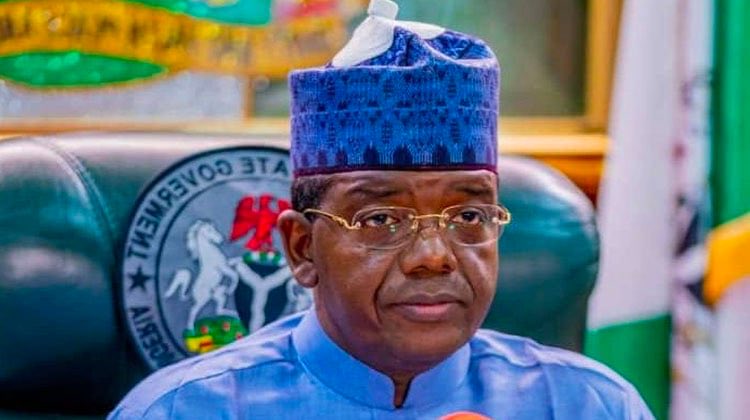
Except for Alhaji Bello Matawalle, the Minister of State for Defence and a few others, northern political heavyweights in the All Progressives Congress (APC) are stalling in their support for the President. As at this moment, the pendulum of grassroots support for Tinubu has shifted from the north. On the streets, in marketplaces and anywhere there is political discussion, the Sai Tinubu chants that heralded the 2023 presidential elections in the north have lost noticeable decibels. The enthusiasm for Tinubu has waned.
As someone who has lived in the north for many decades, I could tell when the music is loud or muted. And perish the arcane thought that Tinubu only needed a few votes from the north to win. This theory by some political pundits is sheer tomfoolery. A day-dream and an unfounded fantasy shorn of critical thinking and historical evidence. Truth is, the north still holds the ace in deciding who emerges president via an election. Reason is simple: The votes are in the north. And in terms of structured and strategic alignment, the north are the masters. They are more likely to give a block vote to any candidate than any part of the country. With all his social media acquired popularity, there are many Igbo who will never vote for Peter Obi. They may not voice their disdain for Obi publicly, but on the day of the ballot, they make their statement with their votes, quietly. Igbo are republican and are not easily swayed by sentiments and bandwagon. In much the same way, the Yoruba may not give Tinubu a block vote. Ditto for the south-south which has a historical antecedent of voting diversity reflecting the ethnic diversity of the zone.
This has been the pattern of voting as recent as the start of the 4th Republic in 1999. No presidential candidate has ever won without a strong northern support. If in doubt, ask Goodluck Jonathan. He lost his re-election bid in 2015 because the north snubbed him. Despite winning in the southern states, he was defeated by Muhammadu Buhari who enjoyed a cult-like followership from the north. In 1999, with Olusegun Obasanjo and Olu Falae, two south westerners on the ballot, it was easy for Obasanjo to defeat Falae because the north endorsed Obasanjo including the retinue of retired northern military generals. Let’s not forget that in 1999, Obasanjo lost in his polling unit in Ogun state. He was rejected by his own people, yet he won because of northern votes.
Total number of votes cast in Kano and Kaduna alone sometimes surpass the same votes cast in an entire southern zone. At the end of all permutations, the north holds the aces. This is why the silence from the north concerning Tinubu’s 2027 presidential victory is troubling. Aside Matawalle and governors from north central zone who have openly voiced their support for Tinubu, the rest have been largely ambivalent, unbothered. Recently, the five APC governors of the north central, namely: Abdullahi Sule (Nasarawa); AbdulRahman AbdulRazaq (Kwara); Hyacinth Alia (Benue); Umar Bago (Niger) and Ahmed Usman Ododo (Kogi) openly announced their support for Asiwaju Bola Tinubu. The other northern governors have maintained cautious silence. Their body language does not suggest anything pleasant for Tinubu. They seemed to be echoing the sentiments of some northern political heavyweights that Tinubu will be a one-term president.
Except for Matawalle, an unpretentious devotee of Tinubu, the auguries are not looking good for the President in the north. Even those that have openly endorsed Tinubu for 2027 are yet to match words with action. Political pundits and persons versed in the Nigerian presidential election dialectics and dynamics are wondering why northern appointees of the President, some in very juicy offices, are not showing enthusiasm in marketing the president.
With barely seven months to the election, some analysts believe that Vice President Kashim Shettima should be leading the overtures of the northern elite in Tinubu’s cabinet to woo the northern electorate, not in a campaign-style manner, but with active engagements including townhall meetings, conferences, colloquiums, structured political talks, focus group engagements, among others as have the opposition parties been doing even in their various fractious states.
They should emulate Matawalle whose footprints across the northern states to sell the Tinubu landmarks and vision are undeniable. Matawalle is unifying factions within the APC family; mobilising grassroots support for the president, and has been preaching the inherent benefits in Tinubu’s reform agenda. His positivity has been infectious. His message is simple: Tinubu deserves another term to consolidate the reforms he courageously started. He believes that there are many emblems of development wrought by the Tinubu government enough to give him another chance. He brings calculated assurance to the people through his messages. And he’s right. Nigeria’s economy had almost collapsed when Tinubu became President in 2023. His predecessor (Muhammadu Buhari) and the 16 years of the now opposition Peoples Democratic Party (PDP) did not help matters. While PDP started and sustained a dubious oil subsidy fraught with corruption and fiscal recklessness, the Buhari government for whatever reason, rather than creatively tackle the nation’s economic challenges resorted to printing money and borrowing from Central Bank of Nigeria in a curious ‘Ways and Means’ arrangement.
That was the nearly-dead economy that Tinubu inherited. But out of the ruins he has pruned inflation, increased external reserve, introduced several social security and poverty alleviation initiatives from cash transfers, minimum wage increment, healthcare support programmes, pension reforms, this time in a more pragmatic way. Tinubu ended a corrupted oil subsidy scheme and freed up funds for development such that states now receive humungous allocations than ever before. He put a stop to a forex scam in the form of multiple exchange rates which gave rise to forex round-tripping; cleared over $10 billion forex backlog owed foreign investors including airlines; introduced student loans through NELFUND; gave autonomous financial life to local governments; increased crude oil production; plus a general facelift of infrastructure among other imprints of development.
True, there is so much to say on the bright side of Tinubu government. Matawalle seems to have mastered this. It is called performance-based communication. Why are northern governors and appointees not hyping these gains of the Tinubu government? Why are they not pointing to the development milestones of this government? They should copy the Matawalle template and take it to Nigeria’s largest vote vault: The North.
· Omojola, political science scholar, writes from Kaduna