
“Borrowing is like cancer when misused” – Obi blasts Nigeria’s debt culture, demands accountability

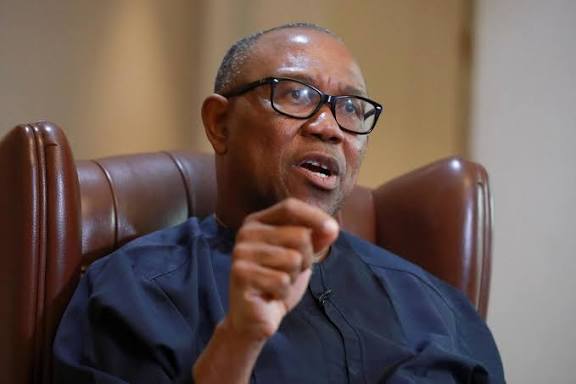
Former presidential candidate of the Labour Party, Peter Obi, has strongly criticised Nigeria’s borrowing pattern, warning that debt taken without productive purpose poses grave risks to the nation’s economic future.
In a post shared on X (formerly Twitter), Obi likened unproductive borrowing to deadly diseases, arguing that loans not tied to economic growth are harmful to national development.
“Mr. President, borrowing is not only a leprosy, but a killer cancer when it is borrowed for consumption and not production as it is in Nigeria today.”
The former Anambra State governor expressed concern that Nigeria’s rising debt profile is largely driven by consumption rather than investments that can generate revenue, jobs, and sustainable growth.
According to him, borrowing for non-productive purposes “slowly eats away at the health, reputation, and autonomy of a nation.”
“One of the major ‘leprosy’ afflicting Nigeria today is not just debt, but debt without productivity. Debt that is not tied to measurable economic value. Debt that does not translate into jobs, growth, or improved living standards for the Nigerian people.”
Obi stressed that responsible economies borrow strategically, with clear plans for repayment and measurable economic outcomes.
“No serious economy borrows recklessly. Nations borrow with discipline, with purpose, and with a clear plan for repayment through productive investment.”
Citing provisions of the Fiscal Responsibility Act 2007, he noted that the law mandates governments to clearly define the purpose of any borrowing and provide a cost-benefit analysis.
“Any government in the Federation or its agencies and corporations desirous of borrowing shall, specify the purpose for which the borrowing is intended and present a cost-benefit analysis, detailing the economic and social benefits of the purpose to which the intended borrowing is to be applied.”
He added that such analysis must demonstrate how loans will drive economic growth and improve citizens’ welfare in measurable terms.
Obi, however, argued that many of the current borrowings fail to meet both legal requirements and economic logic.
“Most of the borrowings by this government do not satisfy the requirements of law or the requirements of economic common sense. The humongous borrowing so far does not show how the projects for the loans enhance the productive capacity of the nation and the welfare of Nigerian citizens.”
He further warned about the implications of Nigeria’s high debt servicing burden, noting that it limits the government’s ability to invest in critical sectors.
“These loans are also dangerous because they burden the capacity of the Nigerian state to improve the economy in the future, as we have one of the world’s highest debt servicing ratios.”
Obi emphasised that the focus should not only be on the debt-to-GDP ratio but also on the debt servicing ratio, which he said directly constrains funding for development.
“What matters is not debt-GDP as much as debt-debt servicing ratio because the latter constrains our capacity to finance the sectors that drive human development and economic growth.”
He warned that mismanaged borrowing creates a cycle of financial strain, where revenues are used to service debts that do not yield economic returns.
“If the money is wrongly spent as we do in Nigeria currently, it becomes double jeopardy because you are using current revenue to service debts that did not add to revenue or improve capacity for more production in the future.”
The former governor concluded by urging transparency and accountability in public borrowing, insisting that governments must justify loans and ensure they benefit citizens.
> “A responsible government does not merely defend borrowing; it explains it, justifies it, and most importantly, ensures it works for the people.”
He ended his statement with his signature optimism:
“A new Nigeria is POssible.”