

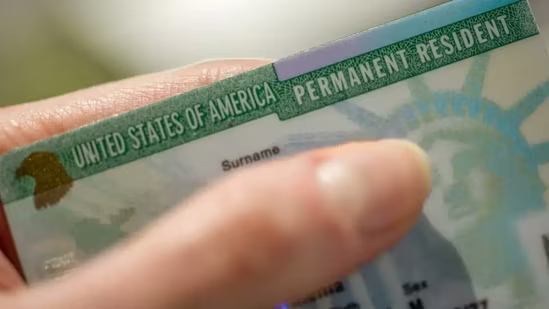
New training materials for officers at the US Citizenship and Immigration Services (USCIS) suggest that green card applicants could face increased scrutiny over certain political expressions, including participation in anti-Israel protests or related social media activity.
According to materials reviewed by The New York Times, immigration officers are being advised to treat “anti-American” or antisemitic views as negative factors when evaluating applications for lawful permanent residency.
Examples referenced in the training include social media posts such as “Stop Israeli Terror in Palestine” accompanied by an image of the Israeli flag crossed out.
Other cited content includes maps showing Israel replaced with “Palestine,” or posts suggesting Israelis should “taste what people in Gaza are tasting.” The materials also indicate that actions such as desecrating the American flag could weigh against applicants.
Also Read: Indians in US see massive surge in cyber extortion, scams amid visa crackdown; Here’s what legal migrants should do
A USCIS spokesperson, Zach Kahler, said: “If you hate America, you have no business demanding to live in America.”
Protests and campus activity
The guidance reportedly places particular emphasis on individuals involved in campus demonstrations. Officers are encouraged to “focus particularly on aliens who engaged in on-campus anti-American and antisemitic activities,” which could affect foreign students seeking to remain in the United States.
Applicants who have “endorsed, promoted or supported anti-American views” or backed “antisemitic terrorism, ideologies or groups” may see those factors considered negatively during the decision-making process.
Social media
USCIS has long reviewed applicants’ social media, but traditionally this has focused on identifying security threats, links to violence, or inconsistencies in personal information.
Also Read: H-1B cap selection for FY 2027: USCIS completes process, releases statement
In April 2025, the agency expanded its screening to include immigrants applying for benefits such as green cards, as well as foreign students and individuals connected to institutions “linked to antisemitic activity.”
While immigration officers have always had discretion to deny applications based on security or ideological concerns, the reported guidance suggests a broader interpretation of what may be considered problematic.
US law already restricts residency for individuals linked to groups advocating violence or the overthrow of the government. Former USCIS officials told The New York Times that enforcement has historically focused on speech that could incite violence.