

Insisting on disarmament and bypassing the requirements of phase one of the Gaza ceasefire deal contradicts US President Donald Trump‘s plan for the Gaza Strip, said a spokesman for the Palestinian group Hamas.
Linking the implementation of ceasefire obligations in Gaza to the disarmament issue “complicates the negotiations over phase two,” Hazem Qassem told Anadolu.
Qassem’s remarks followed a meeting held over the past week in Cairo, Egypt’s capital, which brought together Hamas‘s Gaza leader Khalil al-Hayya, Egyptian officials, high representative for Gaza in the Board of Peace Nikolay Mladenov, and senior US adviser Aryeh Lightstone.
The Hamas spokesman called for implementing the phase one obligations before moving on to any further discussions.
Last September, Trump announced a plan to end Israel’s genocidal war on Gaza. Phase one includes a ceasefire, partial Israeli withdrawal, the release of remaining Israeli captives in the strip, and the entry of 600 aid trucks.
Hamas says that while it complied with the phase one commitments by releasing Israeli captives, Israel failed to uphold its humanitarian obligations and continued its attacks, killing 786 Palestinians, and injuring 2,217 others.
Phase two includes broader withdrawal of the Israeli army from Gaza, which continues to occupy more than 50% of its area, reconstruction, and the start of the disarmament of factions — something Israel has also not implemented, instead insisting on disarmament first.
On Israeli threats to return to fighting, Qassem called them “pressure tools” that will not succeed, saying that Israel “has not actually stopped the war,” amid ongoing killings, occupation of parts of the strip, and restrictions on aid.
On Sunday, Israeli Finance Minister Bezalel Smotrich renewed his call to fully reoccupy Gaza and establish settlements there, according to Channel 14.
– ‘Israel continues its intransigence’
Hamas and Palestinian factions held discussions over the past two weeks with mediators and guarantor countries, according to Qassem.
He said the talks focused on implementing phase one commitments, stopping violations, while also addressing phase two, including the issue of weapons.
The main obstacle is the “Israeli intransigent position” and its linking of all tracks to disarmament, Qassem argued.
The phase one commitments to be implemented include enabling the National Committee to manage Gaza, bringing in aid and shelter materials, supporting the health sector, and fully opening the crossings.
The National Committee for Gaza administration began its work in Cairo in mid-January, one day after its formation was announced.
However, the committee has not yet begun operating inside Gaza, despite Hamas stating that logistical and administrative arrangements for transferring civil administration duties have been completed.
Entry of committee members requires coordination through Israeli-controlled crossings, while no official statement has clarified the reasons for the delay, and Israel has not commented on the issue.
On Sunday, Hamas called on mediators, following meetings in Cairo with unnamed Palestinian factions and mediators, to pressure Tel Aviv to implement the phase one provisions of the ceasefire agreement, as a prelude to serious talks on phase two.
Regarding the meetings in Cairo, Qassem said Hamas is engaging “responsibly and positively” with proposals and will respond after completing consultations with its leadership and Palestinian factions.
He stressed the need to ensure the war does not resume, affirming Palestinians’ commitment to their rights, foremost among them self-determination.
Qassem urged mediators and guarantors of the agreement to “play their role in finding logical and reasonable approaches acceptable to the Palestinian people.”
Hamas “sees complete inability from the Board of Peace in dealing with the situation in Gaza,” he added.
The Hamas official accused the Board of Peace of “bias toward the Israeli position,” saying it is either unable to pressure the occupation to stop violations and implement commitments, or unwilling to do so.
On Jan. 15, Trump announced the establishment of the Board of Peace, described as an international organization aimed at promoting stability, rebuilding credible and legitimate governance, and ensuring lasting peace in conflict-affected or at-risk areas.
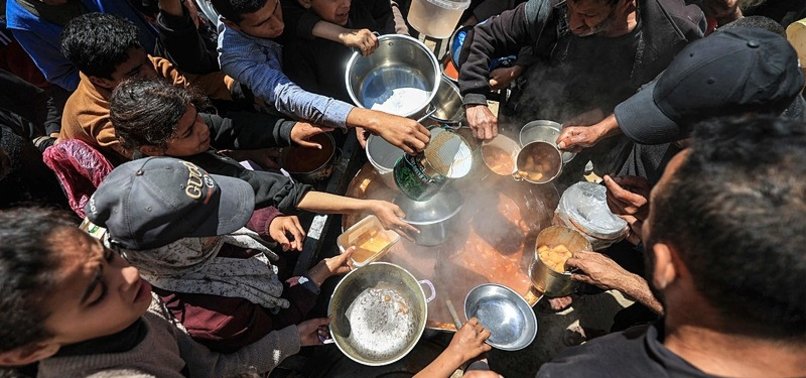
Qassem said the humanitarian situation remains dire, stating that Israel is not complying with the agreement, closing crossings, restricting aid, and killing civilians daily.
The Rafah crossing is not operating as agreed, he added.
On Sunday, the Palestinian Red Crescent Society announced that only about 700 patients have been able to leave Gaza for treatment abroad since the Rafah crossing was partially reopened on Feb. 2, while over 18,000 patients and injured people are still awaiting medical evacuation amid Israeli restrictions.
Since the reopening, returning Gazans have reported Israeli mistreatment, including detention and harsh interrogation lasting hours before being allowed to continue.
Before the war, hundreds of Palestinians crossed daily through Rafah in both directions under a normal system managed by Gaza’s Interior Ministry and Egypt, without Israeli intervention.
This changed after Israel seized control of the Palestinian side of the crossing during the war and imposed strict restrictions on movement, worsening the suffering of patients and limiting access to treatment abroad.
Israel launched a genocidal war in October 2023, with the US support, lasting two years and killing over 72,000 Palestinians and injuring over 172,000, most of whom are children and women, as well as destroying 90% of civilian infrastructure.