

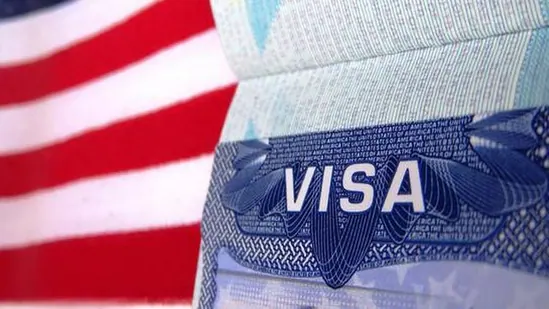
A coalition of Republican legislators has put forth what immigration specialists are describing as the most forceful legislative challenge to the H-1B visa program ever seen. Below are the details of the bill’s proposals, the individuals supporting it, and the potential implications for the hundreds of thousands of skilled foreign workers, a significant number of whom are Indians, who depend on this program.
Also Read: What is the EXILE Act? Bill introduced in US Congress to end H1B visas explained
What is H-1B program?
The H-1B program is designed for employers who wish to recruit nonimmigrant aliens for positions in specialty occupations or as fashion models of exceptional merit and capability. A specialty occupation necessitates the application of a specialized body of knowledge and requires at least a bachelor’s degree or its equivalent. The purpose of the H-1B provisions is to assist employers who are unable to find the necessary business skills and expertise within the U.S. workforce by permitting the temporary employment of qualified individuals who do not have authorization to work in the United States.
Project Firewall
On September 19, 2025, the U.S. Department of Labor unveiled Project Firewall, an enforcement initiative for the H-1B program aimed at protecting the rights, wages, and job opportunities of highly skilled American workers. This initiative will ensure that employers give priority to qualified American candidates when hiring and will hold employers accountable for any misuse of the H-1B visa process.
What does the ‘End H-1B Visa Abuse Act of 2026’ entail?
Presented in the US Congress by Arizona Republican representative Eli Crane, this legislation represents a comprehensive effort to reform the H-1B visa program. This program permits US employers to recruit skilled foreign workers for specialized positions when there are no suitable American candidates available. Crane and his supporters contend that the system has been exploited by major corporations to substitute American employees with less expensive foreign labor.
“The federal government should work for hardworking citizens, not the profit margins of massive corporations. We owe it to the American people to prevent the broken H-1B system from boxing them out of jobs they are qualified to perform,” Crane said.
Who is supporting it?
The legislation has backing from a group of House Republicans: Brian Babin, Brandon Gill, Wesley Hunt, Keith Self, Andy Ogles, Paul Gosar, and Tom McClintock. Congressman Paul Gosar claimed that the program had been “hijacked to replace American workers with cheaper foreign labour, plain and simple.”
Congressman Brandon Gill, who is married to Indian-origin Danielle D’Souza, is one of its co-sponsors. “I am proud to cosponsor Rep Eli Crane’s efforts to reform and tighten our H-1B visa system, ensuring that our immigration system serves American workers first before foreigners,” he stated.
What precisely does the bill suggest?
The proposed legislation addresses the H-1B program from various perspectives:
Reduction in cap: The annual issuance of visas would decrease from 65,000 to 25,000.
Minimum wage requirement: Holders of H-1B visas would be mandated to receive a minimum salary of $200,000.
Restriction on dependents: Visa holders would not be permitted to bring family members with them.
No pathway to Green Card: The legislation aims to obstruct H-1B holders from moving to permanent residency.
Abolition of OPT: The Optional Practical Training program, which is extensively utilized by international students, would be terminated.
Visa transition: Nonimmigrants would be obligated to exit the United States prior to changing to a different visa category.
Federal agencies: Government entities would be prohibited from sponsoring or employing non-immigrant workers.
Why is this important for Indian professionals?
Indian employees, especially in the technology industry, represent one of the largest demographics of H-1B visa recipients. A significant decrease in the annual limit, along with a $200,000 salary requirement and the elimination of dependent visas, would render the program considerably more difficult to access and considerably less appealing for both workers and their families.
This legislation also adds to the previous pressures exerted by the Trump administration. President Donald Trump had previously declared a $100,000 fee on new H-1B applications, a decision that caused widespread concern among current and potential visa holders.
How important is this legislation?
Immigration policy specialist Rosemary Jenks, who was involved in drafting the bill, stated unequivocally: “This is the strongest H-1B bill that has ever been introduced in Congress. H-1B visas were sold to the American people as short-term visas to fill temporary labour gaps, while Americans are trained to take those jobs.”
Jenks further noted that without the option for extensions, H-1B workers would be required to return to their home countries after three years, forcing companies to hire and train new American employees, which may increase costs in the short term but, as supporters contend, will ultimately decrease reliance on foreign labor in the long run.