

SINCE THE start of Operation Epic Fury on February 28th, China has proved careful in its support for Iran. On March 2nd its foreign ministry spokesperson said the American-Israeli strikes “violate international law”. Chinese ships carrying sodium perchlorate, an ingredient potentially used in missile propellant, are thought to have arrived in Iran earlier this month. American intelligence is reported to have warned that China is preparing to send shoulder-fired rockets, the sort that could hit American helicopters and low-flying planes. Yet China has offered little by way of serious economic, diplomatic or military aid. It has made a more indirect and perhaps more important contribution from space.
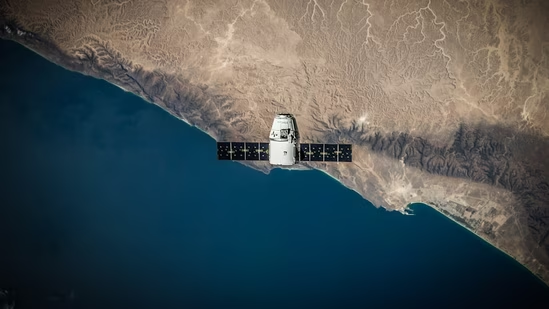
Social media are awash with images of the Middle East taken by Chinese satellites and released by Chinese firms. This comes at the very moment that American firms have clamped down under pressure from the Trump administration, cutting off journalists, researchers and activists from a vital source of open-source intelligence. The proliferation of Chinese photographs reflects dramatic advances in the scope and sophistication of the country’s Earth-observation capabilities. It marks the end of a Western monopoly on the most advanced images from space. But for open-source analysts, Chinese images are a warning as much as a rescue.