
How fake news, disinformation aggravated ENDSARS crisis – Lai Mohammed


A former Minister of Information and Culture, Lai Mohammed, has described the #EndSARS crisis as a classic example of how fake news and disinformation can inflame and aggravate a volatile situation, rather than a failure of government communication.

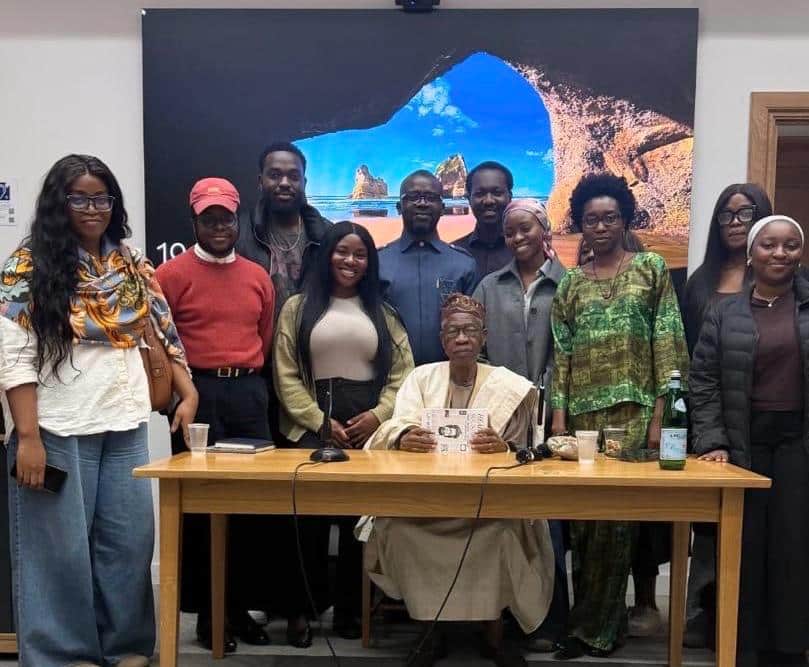
A statement Sunday by Head of Strategic Communications Lai Mohammed’s Media Office Nnamdi Atupulazi, noted that he stated this at a high-level forum at the London School of Economics and Political Science (LSE) on Friday.

The former Minister said that while the protests began as a genuine expression of public grievances against police brutality, they were quickly hijacked by those with ulterior motives and then escalated significantly by the deliberate spread of misinformation and unverified reports across traditional and digital media.

”The problem we had was not the usual communication gap between the government and the citizens. It was fake news and disinformation, coupled with unbridled violence… The biggest challenge came when the government deployed troops to Lekki Toll Gate in Lagos to disperse the protesters. That’s when fake news and disinformation escalated,” he said.

Alhaji Mohammed specifically cited the role played by CNN, whose reports, he said, relied heavily on unverified and, in some cases, doctored content, thereby amplifying tensions and shaping a global narrative that did not fully reflect the realities on the ground.

“What we saw during EndSARS was the dangerous power of disinformation in real time,” he said, noting that the episode reinforces the urgent need to strengthen mechanisms for fact-checking, promote media responsibility and build resilience against the growing threat of information disorder.

On the COVID-19 pandemic, the former Minister highlighted how Nigeria successfully leveraged communication despite the absence of any existing global template at the onset of the crisis.

”When COVID-19 broke out, there was no template to fall back on. The last major pandemic, the Spanish Flu, had occurred over 100 years earlier. So we had to devise our own communication strategy on the go,” he said.

He explained that the government adopted a coordinated and adaptive communication framework, anchored on transparency, consistency and responsiveness. Daily briefings, multi-platform messaging and sustained engagement with the media ensured that Nigerians received timely and accurate information.

”We produced a wide range of advocacy and communication materials, translated them into major indigenous languages and pidgin, and then disseminated them across traditional and digital platforms,’’Mohammed said. 

“We launched live radio programmes nationwide to sustain public dialogue, bringing together health experts, religious and traditional leaders, caregivers and survivors to educate citizens and address lingering doubts about the virus, while tackling stigmatization. We conducted weekly opinion polls that showed approval ratings of between 97% and 98%, a clear indication of the impact of our strategies.” 

This approach, he noted, helped to counter widespread misinformation, manage public anxiety and encourage compliance with safety protocols, including testing, mask-wearing, hand hygiene, social distancing and vaccination, thus averting the predicted massive deaths in a country that recorded only 0.0044% of the 7.1 million global deaths.
Addressing communication during the ongoing insurgency, the former Minister said one of the most impactful interventions was the groundbreaking media tour of territories previously occupied by Boko Haram, which he embarked upon shortly after assuming office.

He explained that at a time when global narratives suggested that the insurgents were firmly in control of large swathes of territory in the North-East, he took the bold step of leading about 40 journalists to liberated areas.

“That trip was a turning point. For the first time, journalists were able to see firsthand that those territories had been reclaimed, and that normalcy was gradually returning,” Alhaji Mohammed said, adding that the visit significantly altered both domestic and international perceptions, countering extremist propaganda and restoring confidence in the military’s progress.

🚨Watch The Full Video ➤