

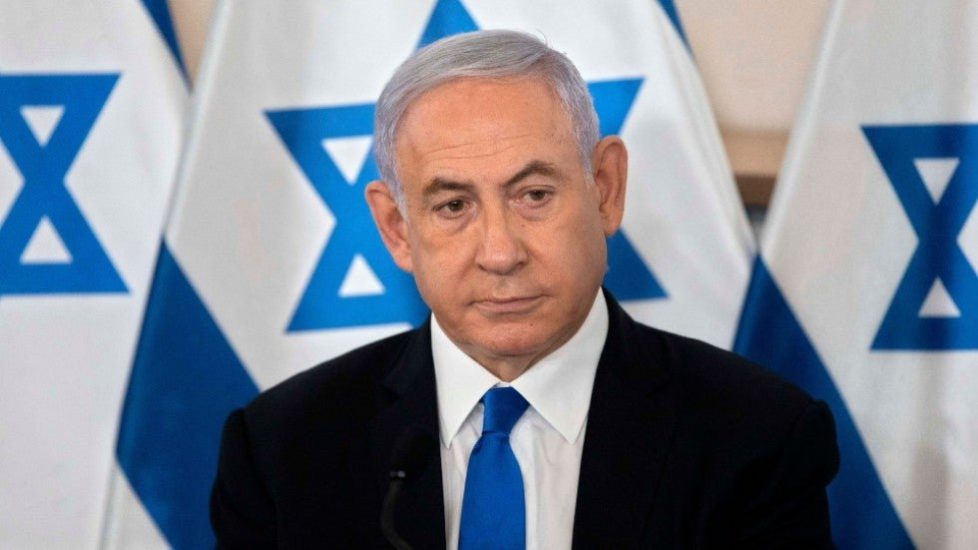
The Jerusalem District Court has approved Prime Minister Benjamin Netanyahu’s request to cancel his scheduled testimony in his long-running corruption trial for this week, citing security and diplomatic reasons linked to recent regional developments.
Another defense witness is expected to testify on Monday while the hearing originally set for Tuesday has been fully canceled. This marks the second consecutive week the court has granted such a postponement.
Last week, judges canceled the hearings after Netanyahu’s legal team filed a request and instructed the defense to refile if the circumstances persisted.
Netanyahu’s lawyers argued that classified security and diplomatic reasons tied to dramatic events in Israel and the Middle East prevented the prime minister from testifying at this time.
The State Prosecutor’s Office opposed the latest request, but the court ultimately sided with the defense for the immediate hearings. Judges have asked Netanyahu’s attorneys to update them later this week on whether similar reasons justify further delays next week. The trial itself, which began in 2020, continues with other witnesses in the meantime.
Netanyahu faces charges of bribery, fraud, and breach of trust in three separate cases known as Case 1000, Case 2000, and Case 4000. He is the first sitting Israeli prime minister to face criminal indictment and has denied all allegations, describing them as a politically motivated witch hunt.
In Case 1000, prosecutors allege that Netanyahu and his wife received illegal gifts worth hundreds of thousands of dollars, mainly expensive cigars and pink champagne, from Hollywood film producer Arnon Milchan and Australian billionaire James Packer over several years. In exchange, he is accused of using his influence to assist the businessmen with matters such as visa issues and regulatory help.
In Case 2000, the charges center on alleged negotiations between Netanyahu and Arnon Mozes, publisher of the Yedioth Ahronoth newspaper. Prosecutors claim the two discussed a quid pro quo arrangement in which Netanyahu would push legislation to limit the distribution of the rival free newspaper Israel Hayom in return for more favorable media coverage of Netanyahu and his family.
Case 4000 is considered the most serious, involving allegations that while serving as communications minister, Netanyahu granted regulatory favors worth hundreds of millions of dollars to Bezeq Telecom and its controlling shareholder Shaul Elovitch.
In return, prosecutors say Elovitch provided positive coverage and influence over content at the Walla news website, which he controlled. The alleged reciprocal arrangement included beneficial decisions on mergers, competition, and other telecom regulations.
The trial has faced multiple delays over the years, including suspensions due to security situations and the prime minister’s official duties. Netanyahu’s cross-examination had been underway in recent months before the latest postponements.