

The US signaled it would stick with a naval blockade of Iranian ports, as it tries to choke-off Tehran’s oil exports and force it back to the negotiating table.
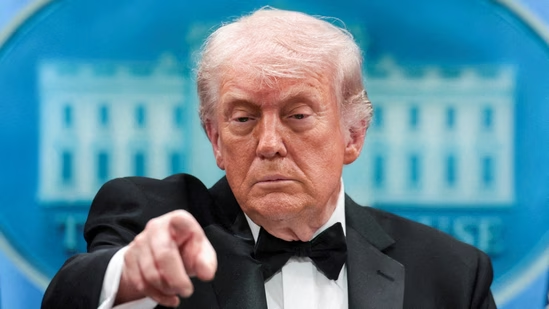
US President Donald Trump claimed on Tuesday that Iran was in a “state of collapse.” His treasury secretary, Scott Bessent, later said Washington’s “maximum pressure campaign” had caused Iran’s inflation to accelerate and that the country was running out of oil storage. It would soon have to start cutting production, Bessent said.
The Iranian rial has weakened significantly in the past two days, according to bonbast.com, a website that tracks the currency’s value on the parallel market, suggesting rising strain on the country’s economy.
The blockade lies at the heart of the impasse between the US and Iran, with the Islamic Republic insisting it won’t restart negotiations or reopen the Strait of Hormuz as long as the naval restrictions stay in place.
Trump says he won’t halt the operation until Iran agrees on a peace deal to end a war that, while now in a ceasefire, began more than two months ago, causing chaos across the Middle East and energy prices to surge.
Also Read | Pentagon’s picture of Iran war a ‘rosy one’? JD Vance concerned Trump not getting full brief: Report
With the strait now effectively shut for two months and little sign of it opening soon, oil prices continue to rise. Brent crude futures climbed around 5% in London to almost $117 a barrel.
It’s unclear how much storage and time Iran has left before it would need to close down wells, which may damage them permanently. Analytics firm Kpler estimates it has another 12 to 22 days.
Trump has told his aides to prepare for an extended blockade and that it carries less of a risk for the US than resuming hostilities or walking away from the conflict without a deal that curbs Iran’s nuclear activities, the Wall Street Journal reported, citing unnamed American officials.
Also Read | Would ships be allowed to safely pass the Strait of Hormuz after US’ war ends? What Iran said
Here’s more on the war:
- Rafael Mariano Grossi, head of the UN’s nuclear watchdog, the International Atomic Energy Agency, said in an interview that Iran’s inventory of enriched uranium is “accessible” should the country wish to retrieve the material. He reiterated that the “consensus of the community” is that the majority of Iran’s uranium stockpile remains buried at Isfahan.
- Japan’s prime minister confirmed that a ship linked to the country has transited the Strait of Hormuz, as Tokyo continues to lobby Tehran for the safe passage of all vessels through the chokepoint.
- The US Office of Foreign Assets Control issued an alert warning financial institutions about the sanctions risk of dealing with China’s so-called teapot refineries over their role in importing Iranian oil.
- OFAC separately issued “firm guidance” warning ships about the “significant sanctions exposures related to making ‘toll’ payments to the Government of Iran” or the country’s military for safe passage through the Strait of Hormuz.
- The US military said marines boarded the commercial vessel M/V Blue Star III in the Arabian Sea on Tuesday, but released it “after conducting a search and confirming the ship’s voyage would not include an Iranian port call.” The ship was suspected of attempting to travel to Iran in violation of the US naval blockade, US Central Command, which oversees the military in the Middle East, said.