

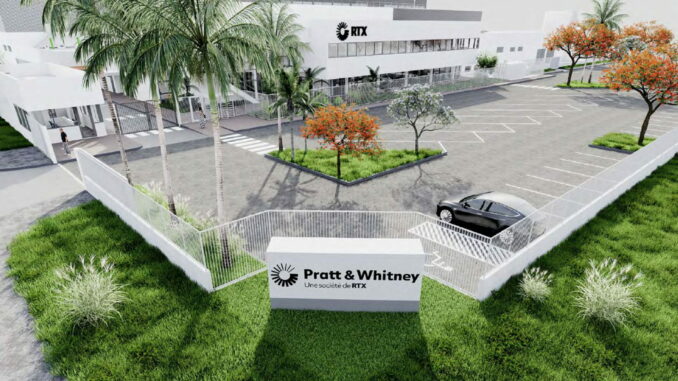
Pratt & Whitney Canada has opened a new manufacturing facility in Nouaceur’s Midparc industrial zone, deepening its presence in Morocco as the country continues to attract major aerospace investments.
The 130,000-square-foot plant will produce detailed static and structural machined parts for aircraft engines, including the widely used PT6 family, with plans to create around 200 jobs by 2030.
The expansion comes as global demand for aircraft engines rises, pushing manufacturers to strengthen supply chains. Pratt & Whitney Canada, a subsidiary of RTX, said the new site will operate as an extension of its global production network.
“This site is a strategic extension of our global production network,” said Maria Della Posta, president of the company, pointing to efforts to build more resilient supply chains and support growing customer demand.
Construction of the facility began in 2024 and was completed in under two years, moving rapidly from groundwork to operational readiness. The process included hiring and training local workers and installing advanced machining equipment. The plant operates using lean manufacturing principles and digital systems designed to improve efficiency while maintaining high quality standards.
The move builds on RTX’s growing footprint in Morocco. Collins Aerospace has operated in the country since 2012, producing cockpit systems and flight controls. Combined, the two operations now employ about 250 people locally.
Morocco’s aerospace industry has recorded steady growth, expanding between 15% and 20% annually over the past decade. The sector now includes more than 140 companies, employs over 20,000 people, and generates more than $2.5 billion in annual exports, positioning it as one of the country’s most dynamic industrial sectors.
Industrial hubs such as Midparc Casablanca have been central to that growth, attracting global manufacturers and suppliers. Partnerships with firms like Boeing and Safran have helped build a local ecosystem, with production expanding beyond basic assembly into high-precision components integrated into global supply chains.
Morocco has also invested heavily in workforce development to sustain the sector’s growth. Institutions such as Institut des Métiers de l’Aéronautique continue to train skilled technicians, while industry events like the Marrakech Air Show have boosted the country’s profile as an emerging aerospace hub.
Faridah Abdulkadiri
Follow us on: