

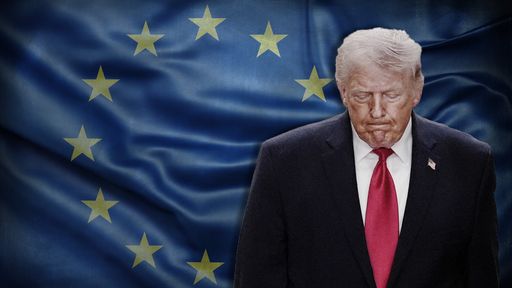
On Tuesday, Italian Prime Minister Giorgia Meloni ended a defence pact with Israel shortly after defending the Pope, who had been criticised by US President Donald Trump.
Italy is now treading its own path, and the United States is unhappy about the growing gulf with one of its strongest transatlantic partners.
The episode highlights the widening differences between the US and its European allies over the Iran war and how to resolve the Strait of Hormuz crisis.
European states have firmly resisted joining the Iran war, which has killed thousands in the region, engulfed Lebanon in a fresh conflict, driven up energy prices and clouded the global economic outlook.
Here’s a closer look at where key European countries stand.
Italy: ‘We are not at war’
Italy has significantly distanced itself from the military campaign, suspending its defence cooperation agreement with Israel on Tuesday. Earlier, Prime Minister Giorgia Meloni announced that Italian territory will not be used for US or Israeli strikes, declaring the US-Israeli war on Iran to be “outside the framework of international law.”
“We are not at war, and we do not want to enter a war,” she stated on March 11. Consequently, Italian officials denied US bombers transit through the Sigonella Air Base, citing Rome’s “constitutional limitations” on undeclared wars.
This diplomatic rift deepened following a public clash between Meloni and Donald Trump over Pope Leo XIV. After the Pope expressed solidarity with Palestinians and opposed the war against Iran, Trump fiercely criticised the pontiff. Meloni swiftly defended the Pope on Tuesday, condemning Trump’s remarks as “unacceptable” and asserting that religious leaders do not take orders from politicians.
In response to Meloni’s remarks, Trump on Tuesday said that he was “shocked” by Meloni’s positions, stating she was “not helping” the US on NATO-related issues and discussions surrounding Iran.
Her stance drew rare bipartisan support. Italy’s main opposition leader, Elly Schlein, backed the Prime Minister on Wednesday, stating: “No foreign head of state can allow themselves to attack, threaten, or show disrespect toward our country or our government.”
The Vatican: Pope Leo denounces ‘delusion of omnipotence’
During his Easter vigil, Pope Leo XIV delivered a scathing rebuke of the escalating conflict and strongly opposed the war with Iran.
“Enough with the idolatry of self and money! Enough with the display of force! Enough with war!” the pontiff stated on April 11.
In response to the Pope’s steadfast stance, US President Donald Trump criticised the pontiff on social media on April 13. Trump called him “weak on crime” and stated: “I don’t want a Pope who is fine with Iran having a nuclear weapon.”
Addressing Trump’s hostility directly the following day, Pope Leo firmly pushed back against his remarks: “I have no fear of either the Trump administration, or speaking out loudly.”
Germany: ‘Germany is not a party to the war’
Berlin has taken one of the firmest lines against participation in US-Israeli strikes. Chancellor Friedrich Merz said on March 18 that Germany “would have advised against pursuing this course of action” and refused to deploy forces in the Strait of Hormuz, saying the country “will not participate in ensuring freedom of navigation… by military means.”
This definitive stance had been established earlier in the month by Defence Minister Boris Pistorius. On March 4, he declared: “Germany is not a party to the war. The German Armed Forces will not participate.” Warning that “starting wars is much easier than ending them,” and added US has no exit strategy. He emphasised a diplomatic path through the EU and UN rather than military involvement.
The UK: ‘Not our war’