
Rs 13200559255800: How US’ expensive THAAD missile defence umbrella failed to protect Gulf states?

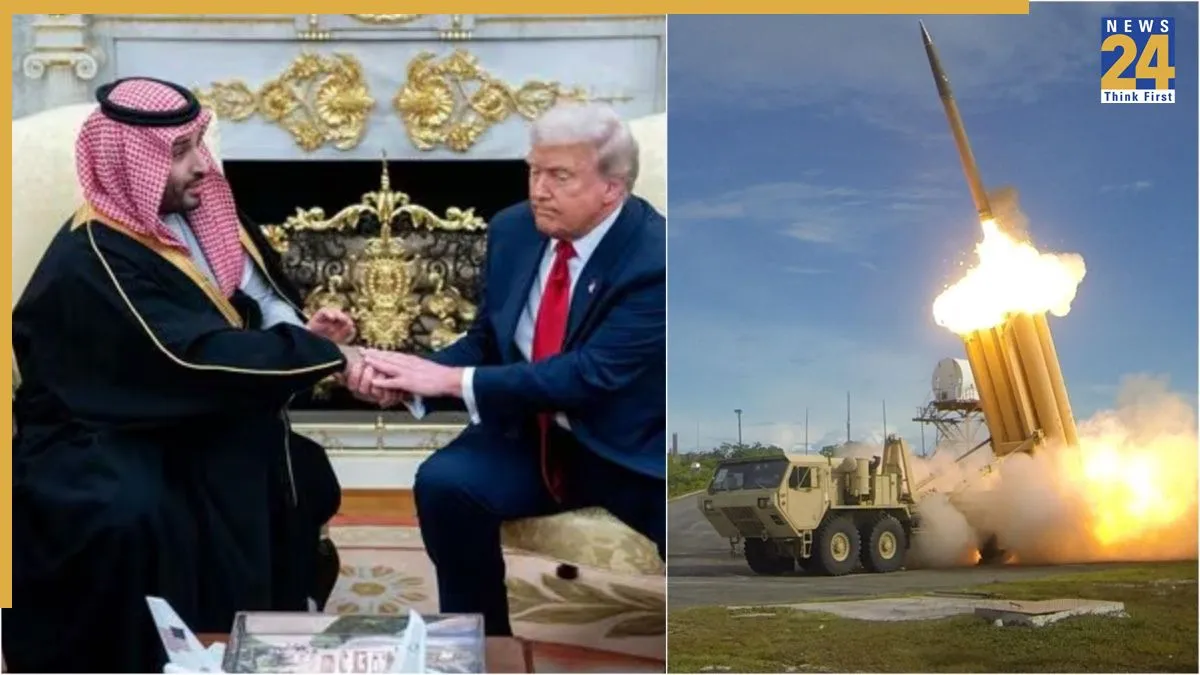
Iran war: For decades, Washington’s Arab allies invested hundreds of billions of dollars into advanced American missile defence systems, hoping that it would protect them from Iranian missile threats.
However, when it actually happened, US’ much-hyped systems like the Terminal High Altitude Area Defense (THAAD) and the Patriot PAC-3 tumbled like a house of cards, exposing the Gulf states to a level of infrastructure damage they probably never even anticipated as Iranian missiles and drones rained down on their territory with impunity.
How much Gulf states spent on US air defence systems?
Gulf states have spent tens of billions, much more than US ally, on American missile defence systems, including Saudi Arabia sealing a $142-billion arms package– the largest arms agreement in US history– when Donald Trump travelled to Riyadh in May 2025.
The military package primarily included THAAD systems, Patriot PAC-3 upgrades and missiles, advanced air-to-air weapons and combat drones, which aimed to “modernise the Saudi military with state-of-the-art equipment to address threats from Iran and its proxies”.
Barely nine months later, these systems were put to the test when Iran launched retaliatory strikes after the February 28 US-Israeli attacks killed Iran’s top military and political leadership, including Supreme Leader Ayatollah Ali Khamenei.
Why US systems failed to protect Gulf nations?
Iran’s asymmetric approach to warfare meant it targeted the soft underbelly of American military power in the Gulf as Tehran fired more than 400 ballistic missiles and nearly 1,000 drones in initial strikes on US assets located in all six GCC countries– Bahrain, Kuwait, Qatar, Saudi Arabia, Oman, and the UAE. Strikes.
The THAAD radars and Patriot batteries, which the US had sold to the GCC states for this exact scenario, failed spectacularly as Iranian missiles and drones hit military bases, energy facilities, airports, and civilian infrastructure across the Gulf.
How much damage did Iranian strikes cause?
While the US barely acknowledged any damages, the level of destruction wreaked by Iranian strikes became impossible to hide, with satellite imagery revealing expensive AN/TPY-2 radars in Jordan, Saudi Arabia, and the UAE– called the “eyes” of the THAAD system– completely wrecked with direct hits.
A THAAD radar at the Prince Sultan Air Base in Saudi Arabia turned into charred wreckage, the radar site in Jordan’s Muwaffaq Salti Air Base was completely obliterated, leaving behind blackened debris and impact craters, while a THAAD battery near Al Ruwais in the UAE sustained direct hits.
According to military experts, the sheer volume of Iranian projectiles overwhelmed Patriot systems as low-cost drone swarms saturated its interceptors, allowing Iran’s ballistic missiles to strike critical targets in the Gulf.
While the UAE had previously touted high interception rates against Houthi threats, it stopped publishing success percentages as interceptions witnessed a sharp decline around mid-March.
Why US shifted THAAD batteries from South Korea?
As the US’ interceptor stockpile rapidly dwindled due to persistent Iranian missile and drone barrages, the Pentagon started relocating THAAD batteries and other missile defence assets from other theatres, including South Korea, to the Middle East.
Secretary of State Marco Rubio admitted Iran was producing “over 100 of these missiles a month. Compare that to the six or seven interceptors that can be built a month”.
Did GCC nations diplomatic overtures fail?
Notably, Gulf nations had seen this fate coming, at least to some extent, as they attempted to mend diplomatic ties with Iran, even as they stockpiled American missile defence systems,
Riyadh restored full diplomatic relations with Tehran in a historic deal brokered brokered by China in March 2023. After the ongoing conflict erupted, GCC nations called for a diplomatic solution with Saudi Arabia initially refusing to allow the US to use its airspace or military bases for attacks on Iran, citing lack of objectives shared by Washington.
Other Gulf states also blocked access to the US fearing Iranian retaliation, but US and Israeli actions forced them to rely on American systems for protection, which proved leaky at best, as Iranian missiles and drones wreaked widespread devastation.