

Forget the sanitised press releases. Here is what is unfolding around the Amukpe-Escravos Pipeline (AEP).
There are disputes, and then there are situations that test the credibility of the process. What is unfolding around the Amukpe-Escravos Pipeline is not a routine commercial disagreement. It is a case study in how terminated transactions can resurface, how valuations can lag behind reality, and how strategic assets can end up being transferred on terms that no longer reflect their worth.
Let us set aside the polite language. What is in view is an attempt to revisit a transaction that had run its course, advance a process that was formally concluded, and rely on valuation benchmarks that appear increasingly detached from current market realities.
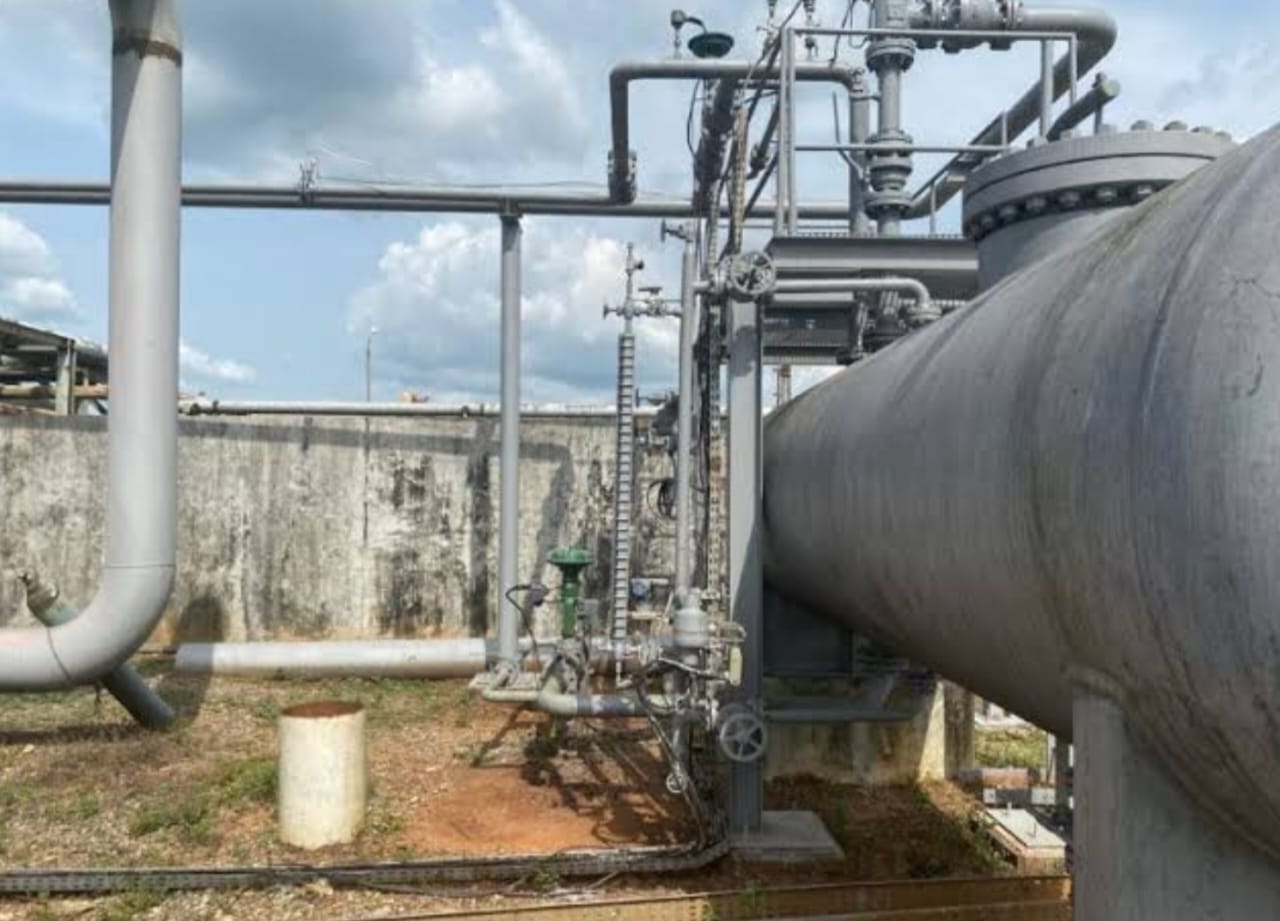
Before going further, it is important to establish what is at stake. The AEP is not some rusty pipeline. It is a 160,000-barrel-per-day lifeline. It is the younger counterpart to the frequently disrupted Trans-Forcados Pipeline. It is a strategic asset that, when operational, keeps Nigerian crude oil flowing. At present, a syndicate of lenders, alongside the asset’s operators, have maintained uptime above 95 per cent. It is a functioning, revenue-generating asset, not a distressed commodity.
So what is the issue?
A transaction that collapsed is now back under consideration. And that raises legitimate questions.
It is worth reiterating that the AEP is not decorative infrastructure. It is a critical evacuation artery, built with syndicated financing from Nigerian banks and Afreximbank, and structured as collateral under a reworked facility involving AMCON and a consortium of lenders.
This point is crucial. This is not an asset floating in regulatory limbo. It is tied to obligations. It is governed by agreements. It sits within a framework shaped by lenders with significant exposure, and neither the asset nor its operator is under receivership. That alone should provide clarity. Yet the questions persist.
The original divestment process, supervised under a Technical Committee constituted by AMCON, produced a preferred bidder and a reserve bidder. When the preferred bidder fell through, the reserve bidder stepped in. Up to that point, the process followed a familiar pattern.
Then complications emerged. The reserve bidder, Continental Oil and Gas, revised its offer to $243 million after its initial bid was rejected. Even at the time, lenders expressed concern that the asset was being priced below its strategic and long-term value.
That concern was not theoretical. This pipeline offers a viable alternative to older, more vulnerable routes. It is a revenue-generating asset with demonstrable throughput and strong uptime.
Rather than stabilise the process, however, the transaction became increasingly fluid.
Partway through, a new entity, Conpurex Limited, entered the picture. The transition was not accompanied by a clearly articulated substitution process. Questions were raised around structure, capacity, and funding clarity.
What followed was a prolonged period of renegotiation. Payment timelines shifted. Obligations were revisited. Elements of the commercial framework were reopened. At several points, positions emerged that would have reassigned risks typically borne by the buyer.
The Technical Committee resisted these deviations. The gaps, however, persisted.
Key payment milestones were missed, including a significant tranche. Periods of silence followed. Additional conditions were introduced that altered the balance of the agreement.
By October 2024, after extended delays and unresolved issues, the Technical Committee formally terminated the process.
Not paused. Not deferred. Terminated. That position was supported by the lender syndicate, which called for a fresh process anchored on an updated valuation.
Ordinarily, that would have concluded the matter.
Instead, it appears elements linked to the earlier process have continued to find their way into consideration.
For clarity, this is not an allegation but an observable development reflected in correspondence and approvals connected to the earlier transaction. That fact raises concern.
Moreover, the numbers involved deepen that concern. The same 40% stake previously associated with a $243 million offer has since been independently assessed in 2025 at a mid-case of $372 million, a high case of $544 million, and an optimal case of $641 million.
Even the most conservative of these figures represents a substantial gap from the earlier benchmark. The upper range is nearly three times that figure.
This is not a marginal difference. It is a material divergence.
Proceeding on the earlier valuation under current conditions would raise legitimate questions about value preservation. Any shortfall would ultimately sit with financial stakeholders, including Nigerian banks, AMCON, and, indirectly, the broader public balance sheet.
Meanwhile, the asset itself has not deteriorated. It remains operational. A joint operating arrangement with NNPC Exploration and Production Limited is in place, with structures designed to support stability and revenue continuity.
This is not a distressed sale scenario. It is a functioning asset within an evolving governance framework.
Which raises a reasonable question. Why revisit a transaction rooted in an earlier process when both the asset’s performance and its valuation context have materially changed?
This is where the issue moves beyond a single deal.
If processes that have been formally concluded can reappear without a clear reset, the distinction between closure and continuity becomes less certain. If valuation benchmarks can persist despite materially different market conditions, pricing discipline weakens. And if financial stakeholders carry risk without commensurate influence over outcomes, future participation becomes more cautious.
None of this requires intent to be inferred. The outcomes speak for themselves. For a sector undergoing reform, these are not abstract concerns. They go to the core of investor confidence and institutional credibility. Nigeria has emphasised transparency, consistency, and rules-based engagement in its oil and gas reforms. Situations like this test how those principles operate in practice.
The path forward is not complicated. A clean reset remains available. A fresh valuation. A transparent, competitive process. Alignment among stakeholders. Anything less risks leaving open questions that extend well beyond a single asset.
Because this is no longer just about a pipeline. It is about whether the process retains its meaning when tested. And whether, in moments that matter, outcomes are guided by established rules or shaped by evolving circumstances.
■ Crispin Oduobuk, a former acting editor of Weekly Trust, writes from Abuja.