

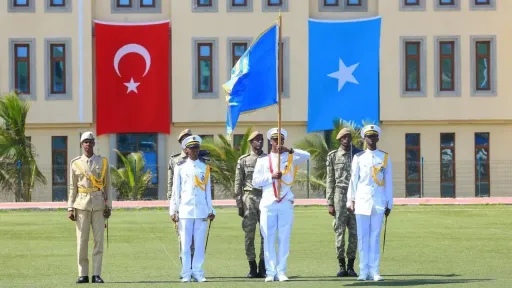
In August 2011, while famine was tearing through the Horn of Africa and much of the world was still debating what to do from a safe distance, a plane landed in Mogadishu.
On board were President Recep Tayyip Erdogan, his wife, his ministers, and a government that had decided to visit a place most capitals considered too dangerous to visit.
The photographs from that day, of a Turkish cabinet walking through the tented camps of the starving, were not diplomacy as the world then understood it.
They were something we in Somalia had almost stopped expecting from anyone: solidarity.
That visit changed our country. It also changed what others thought possible in a place like ours.
Nearly fifteen years on, as I travel to Türkiye to attend the Antalya Diplomacy Forum and to strengthen our bilateral partnership, I want Turkish readers to know, plainly and in our own words, what their government and taxpayers have made possible, and what we intend to build with them next.
A nation helped back onto its feet
When Turkish Airlines landed at Aden Adde International Airport on March 6, 2012, it was not just a new route.
It was the first international carrier to return to our capital after the collapse of the state in 1991, and it said something the rest of the world had not: Mogadishu is open again.
That flight is now a daily artery of trade, family, and diplomacy.
Turkish companies rebuilt Aden Adde to an international standard. They modernised the Port of Mogadishu, which today generates a decisive share of our federal revenues. Turkish engineers paved the first proper roads through our capital in a generation.
The Recep Tayyip Erdogan Training and Research Hospital, the country’s largest tertiary facility, now treats more than a thousand Somalis a day. Many of them would otherwise have had no specialist care at all.
Related
Tens of thousands of Somali students have studied in Türkiye on Turkish government scholarships, from secondary school through the doctoral level.
They come home as doctors, engineers, teachers, civil servants, diplomats. An entire generation of our professional class was educated in Turkish classrooms, and most of them still consider Istanbul or Ankara a second home.
At Camp TURKSOM in Mogadishu, the largest Turkish military training facility anywhere outside Türkiye, the future officer corps of the Somali National Army is being trained to defend our people and our territory.
The patient work of Turkish instructors has made possible battlefield gains against al-Shabaab that were unthinkable a decade ago.
The recent delivery of F-16 fighter jets and T-129 ATAK helicopters, together with continued support for our naval and air forces, is carrying that partnership into the next generation of Somali security.
And in the rooms where it matters, at the United Nations Security Council, at the Organisation of Islamic Cooperation, Türkiye has been an unflinching voice for Somalia’s sovereignty and unity.
Where others have hedged, Ankara has been direct.
We name our partners plainly
Türkiye has not done this alone, and we would not write an honest account if we suggested otherwise.
The African Union mission in Somalia, sustained by European Union funding and the real sacrifice of African troop-contributing countries, has given our federal institutions the time and space to consolidate.