

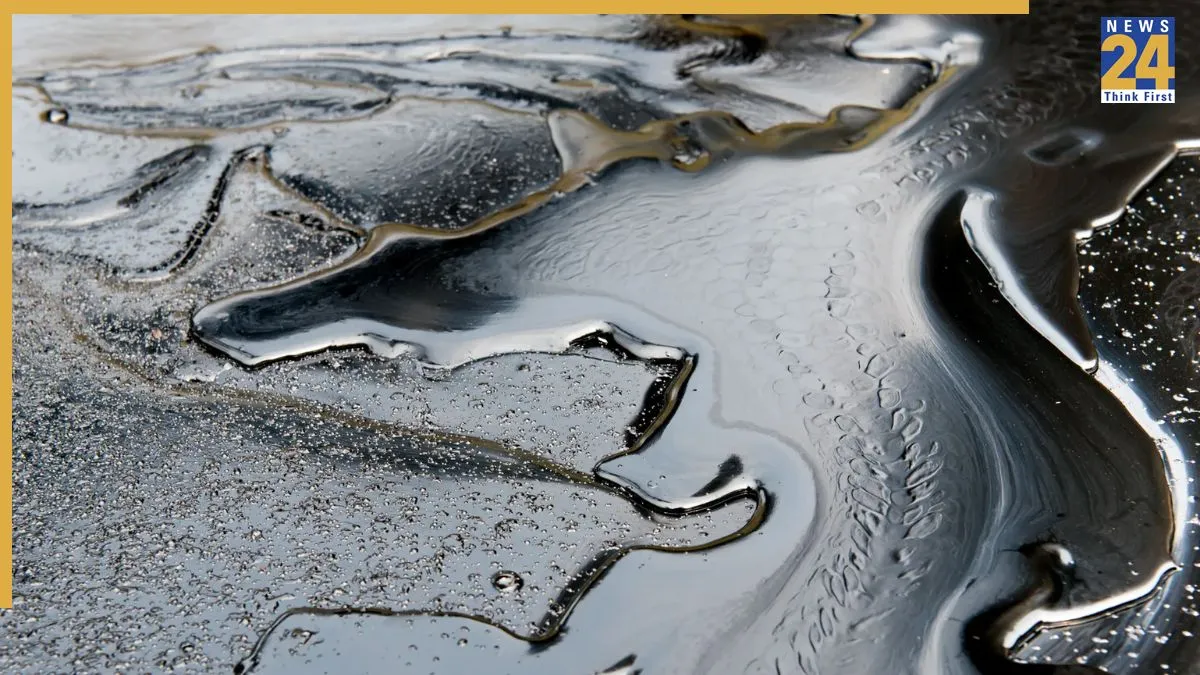
The largest oil reserves in the world are found in the Persian Gulf. But why isn’t crude oil spread evenly across the planet? The answer lies in a set of rare natural conditions that allowed oil to form, accumulate and remain trapped underground over millions of years.
Where did it all begin?

Around 100 to 200 million years ago, much of today’s Middle East was covered by a warm, shallow sea called the Tethys Ocean. This region was rich in marine life. Tiny organisms thrived in huge numbers and when they died, they sank to the seabed.
Layers beneath the seafloor

3 / 6
At the bottom of the sea, oxygen levels were very low. Because of this, the dead organisms did not fully decay. Instead, their remains kept piling up over time, forming thick layers of organic material on the ocean floor.
Shift beneath the Earth

4 / 6
Millions of years later, a major geological event changed everything. The collision between the Arabian Plate and the Eurasian Plate created structures like the Zagros Mountains and formed deep underground basins. These basins acted like natural storage spaces for oil.
Heat, pressure and oil formation

5 / 6
As more layers built up, the buried organic matter was subjected to intense heat and pressure inside the Earth. Over millions of years, this process slowly transformed the material into hydrocarbons, what we now know as crude oil.
Why only here?

6 / 6
Oil formation is only part of the story. In the Persian Gulf, layers of salt and limestone formed dome-like structures called cap rocks. These acted like seals, preventing oil from escaping to the surface. While oil exists in other parts of the world, the Persian Gulf is unique because all the right conditions came together in one place: rich organic life, proper burial, intense heat and pressure and strong natural traps.