

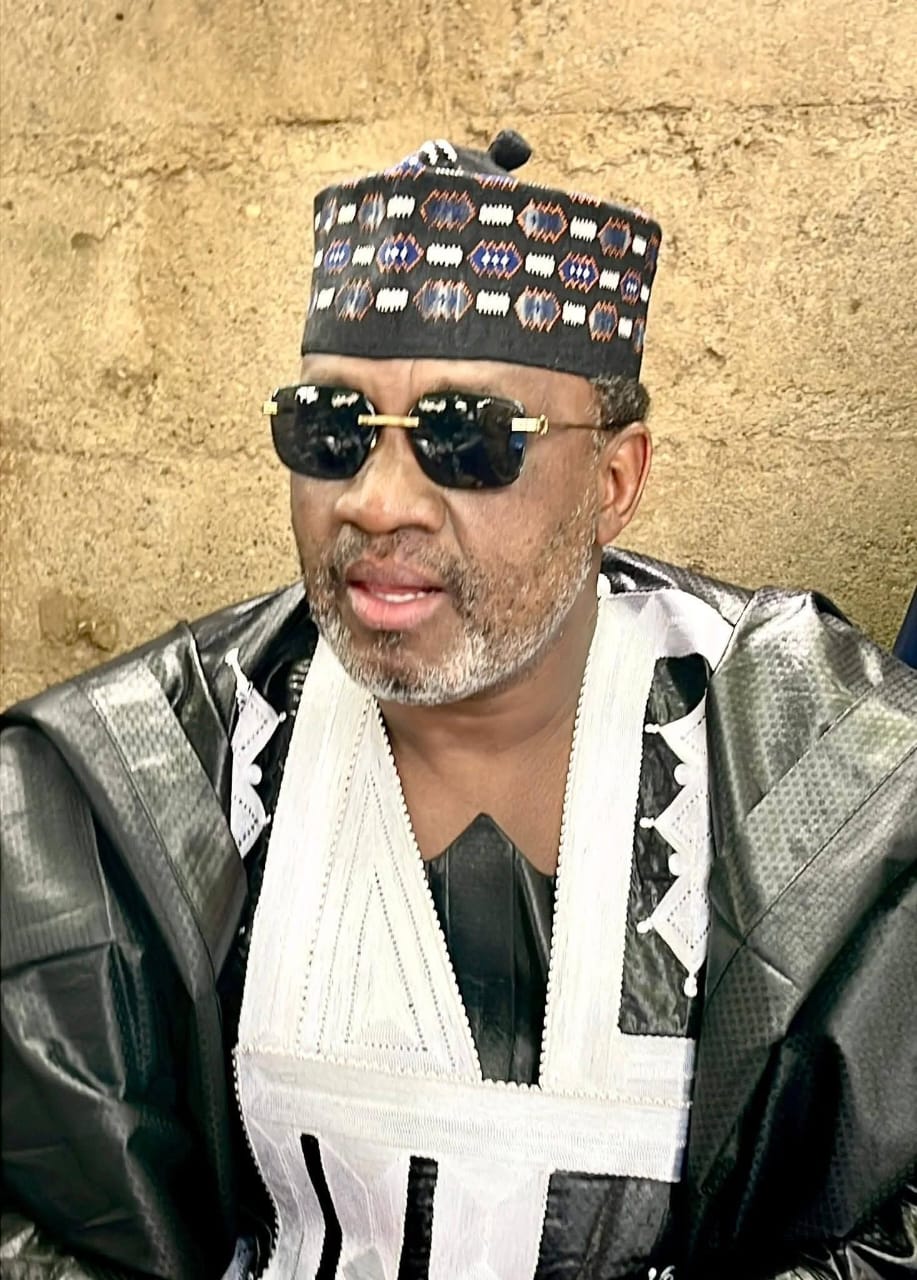
The politics of Zamfara state has, in recent years, evolved into a theatre of contradictions, where sabotage and strategy, betrayal and reconciliation, failure and fleeting success all coexist in uneasy balance. Yet, beneath all the intrigue lies a more troubling constant: a stubborn pattern of political actors repeating the same costly mistakes, while somehow expecting a different outcome.
It is this cycle, predictable, avoidable, yet relentlessly recurring, that now casts a long shadow over the unfolding permutations ahead of 2027. And at the centre of this unfolding drama is the incumbent governor, Dauda Lawal Dare, whose recent political moves has forced political observers to ask a fundamental question: is he walking straight into the same trap that consumed his predecessors?
To properly situate the present, one must revisit the defining moment that altered the political trajectory of Zamfara state during the 2019 electoral crisis. At the time, Abdul’aziz Abubakar Yari, then governor of the state, was rounding off his second tenure and, in typical fashion, had anointed a successor within the ranks of the All Progressives Congress (APC). However, what should have been a routine succession plan soon unraveled into a legal and political catastrophe.
The APC in Zamfara failed to conduct valid primary elections, a foundational requirement under Nigeria’s electoral laws. This failure was not merely procedural; it turned out to be fatal for the party. This is because, aggrieved party members, led by Kabiru Garba Marafa, approached the courts, challenging the legitimacy of the process.
The matter escalated through the judicial hierarchy until it reached its climax at the Supreme Court. On May 24, 2019, in a landmark judgment delivered by a panel of justices led by Ibrahim Tanko Muhammad (then Acting CJN) the apex court ruled that the APC had indeed failed to conduct valid primaries in Zamfara state. Consequently, all votes cast for the party in the general elections were declared wasted votes.
The implication was unprecedented. Despite winning overwhelmingly at the polls, the APC lost all elective positions in the state through judicial pronouncement. The court ordered that candidates of the Peoples Democratic Party (PDP), who came second in the elections, be declared winners. Thus, Bello Muhammad Matawalle emerged governor, not through the ballot in the conventional sense, but through the force of law.
After the damage had been done, a twist of irony saw the same dramatis personae whose actions led to the APC’s downfall reuniting under its banner. Abdul’aziz Abubakar Yari, whose missteps cost the party dearly, and Kabiru Garba Marafa, whose insistence on justice triggered the legal avalanche, both reunited in the APC fold. Even more curious was the decision of Matawalle, whose governorship was gifted by the PDP platform, to defect to the APC.
That singular decision by Matawalle remains one of the most consequential political miscalculations in the recent history of Zamfara state. Having benefited from an extraordinary judicial intervention, one would have expected a measure of political prudence, if not loyalty. Instead, Matawalle gambled on the APC, perhaps convinced that incumbency, coupled with federal alignment, would secure his re-election.
What followed was predictable. The APC in Zamfara was anything but a united house. It was a congregation of rival tendencies, competing interests, and unresolved grievances. The internal contradictions were never fully addressed, even as the 2023 elections approached. Matawalle, despite serving as the North-west coordinator for the presidential campaign of Bola Ahmed Tinubu, found himself politically vulnerable at home.
The result was decisive. In 2023, Dauda Lawal Dare of the PDP defeated an incumbent governor, a rare feat in Nigeria’s politics. His victory was widely interpreted as a triumph of popular will over entrenched political machinery. It was, in many ways, a repudiation of the arrogance of power and a reminder that the electorate, when sufficiently mobilised, can upend even the most formidable structures.
One would think that such a political trajectory would instill in its beneficiary a deep respect for the very forces that made it possible—the people and, if one must add, providence. But politics, especially in Zamfara, has a way of bending logic.
Today, there are growing indications that Dauda Lawal Dare may be drifting into the same mindset that led to the fall of Matawalle. His defection to the APC suggest that he believes his re-election prospects might be better secured through political realignments, particularly with elements within the APC. And this raises more questions than answers.
For political neutrals, this is, at best, a risky gamble. At worst, it is a complete misreading of the political mood. The APC that Dauda defeated in 2023 was not necessarily weaker in structure; it was weaker in cohesion and credibility. Aligning with fragments of that same structure does not automatically translate into political advantage. If anything, it risks alienating the people of Zamfara who propelled him to power.
Meanwhile, the opposition landscape is quietly reshaping itself. Kabiru Garba Marafa, a central figure in the political evolution of Zamfara state, has exited the APC and found a new political home in the African Democratic Congress (ADC). This move, on the surface, may be dismissed with the arrogance that often trail such decisions. But in the context of the fluid political environment of Zamfara state, it carries significant implications, specifically for Dauda whose political strength, the people appear to be shifting their support.
Marafa is not new to political battles fought from the margins. His 2019 legal challenge against the APC establishment demonstrated both resilience and strategic depth. Should he choose to position himself as an alternative force in 2027, he would be doing so under conditions not entirely dissimilar to those that favoured Dauda in 2023.
The people of Zamfara, having experienced both the APC and the PDP in rapid succession, may well be in the mood for another experiment. There is a growing sense of fatigue, a feeling that neither of the dominant parties has fully delivered on its promises. In such an environment, a “third force” narrative, as is being craftily articulated by Marafa, can gain traction.
This is where the danger lies for the incumbent. Elections in Zamfara are increasingly less about party labels and more about perception, momentum, and connection with the grassroots. The “lone wolf” phenomenon, where a candidate positions himself as an outsider challenging a flawed establishment, has proven effective before. It could very well repeat itself.
And that brings us back to the central question: is Dauda Lawal Dare caught in the bubble of past mistakes? Whether one wants to acknowledge it or not, there is an eerie resemblance between the current trajectory and the missteps of the past: the tendency to overestimate the value of elite alliances while underestimating the power of people’s will or grassroots sentiment; the inclination to believe that political survival is best secured through backroom arrangements rather than public trust; the quiet drift from the very principles that once inspired electoral victory. Zamfara has seen this script before. It rarely ends well.
Dauda’s decision to follow in the footsteps can best be described by the popular quote: insanity is doing the same thing repeatedly and expecting different results. Zamfara today risks becoming a living case study of that principle. And, as 2027 approaches, the state stands once again at a crossroads. The choices made by its leaders, especially the incumbent, will determine whether it breaks free from its cycle of political déjà vu or sinks deeper into it.
For now, one thing is clear: Kabiru Garba Marafa and the ADC appear to be positioning themselves as credible alternative, tapping into a growing undercurrent of dissatisfaction. And in a place like Zamfara, where political tides can shift with remarkable speed, that may be all that is needed to stage yet another upset.
Whether Dauda recognises the warning signs, or chooses to ignore them, is a question only time can answer. But if history is anything to go by, Zamfara is not forgiving of those who fail to learn from it.