
Aiyedatiwa Urges Universities To Produce Future-Ready Leaders For Nigeria’s Technological, Economic Transformation

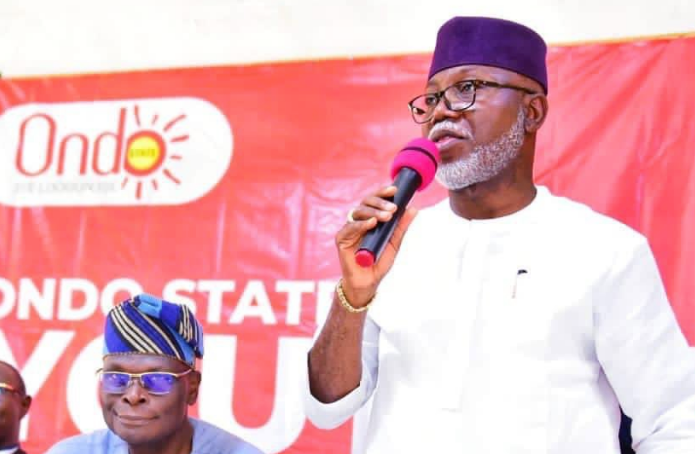
Governor Lucky Aiyedatiwa of Ondo State on Thursday said Nigeria’s future economic and technological advancement would depend largely on the quality of leadership and the strength of its educational institutions.
Governor Aiyedatiwa, who was guest speaker at the Federal University of Technology, Akure (FUTA) Foundation Day Lecture, stated this while delivering a lecture titled “Leadership, Organisational Performance and Technology in a Rapidly Changing World.”
He said universities must play a central role in producing a new generation of leaders capable of responding to global disruptions and emerging challenges.
The governor described higher institutions as critical to innovation, human capital development and national competitiveness, stressing that their role goes beyond certification to shaping individuals who will influence societal direction.
According to him, “leadership remains fundamental to organisationalsuccess,” adding it involves influencing and motivating people towards achieving collective goals rather than exercising authority through coercion.
He further stated that “leadership is a continuous process based on interaction between leaders and followers,” noting that its effectiveness depends on the ability to adapt to changing realities.
Governor Aiyedatiwa noted that “leadership is fundamentally about influence rather than coercion,” stressing that effective leadership relies on inspiration and persuasion.
He also stated that leadership should be understood as a process rather than a position, explaining that it “unfolds through continuous interaction between leaders and followers within an organisational context.”
The governor traced the evolution of leadership theories from earlier beliefs that leaders are born with innate traits such as intelligence and confidence to modern perspectives which emphasise learned skills, behaviour and situational awareness.
He said, “leadership competence can be developed through education and experience,” identifying technical, human and conceptual skills as essential components of effective leadership.
Governor Aiyedatiwa noted that skills can be developed over time through education, experience, culture, intelligence and environmental influences, stressing that leadership capability is not fixed.
The governor also stated that leadership styles vary across situations, citing autocratic, democratic and laissez-faire approaches, adding that effective leadership often involves a combination of styles depending on circumstances.
Linking leadership to organisational performance, he said, “institutions perform better when leaders provide direction, formulate sound policies and inspire commitment.”
“No organisation can succeed without the commitment and effort of those responsible for implementation,” stressing the importance of human input in achieving results.
The governor further stated that performance is assessed through clearly defined objectives and Key Performance Indicators,” noting that measurement is essential to accountability.
On universities of technology, Governor Aiyedatiwa said they remain critical to national development, adding that “a university of technology exists not merely to award academic degrees but to produce skilled, innovative and technologically competent graduates.”
He cited FUTA as a leading example, noting that “the quality of graduates, research impact and innovation define institutional performance.”
He added that “technology has transformed the world into a global village,” adding that news travels so quickly that sometimes social media knows what has happened before official meetings conclude.
However, he warned that technology alone does not guarantee organisationalsuccess,” stressing that it must be integrated into leadership strategy.
In her welcome address, the Vice Chancellor of FUTA, Prof. Adenike Oladiji, said leadership and technology remain central to improving organisationalperformance.
She noted that technology has become central in the digital age, serving as a vital tool for leaders to shape organisational direction, drive innovation and enhance impact.”
Fidelis David
Follow us on: