

Hustle Meets Policy — And This Time, Policy Showed Up
By Kabir Abdulsalam,
At a time when Nigeria’s economic ambitions are being recalibrated on fiscal reforms and global uncertainty, a quiet but consequential dialogue unfolded on Thursday, 9th this month at the State House Conference Centre, Abuja.
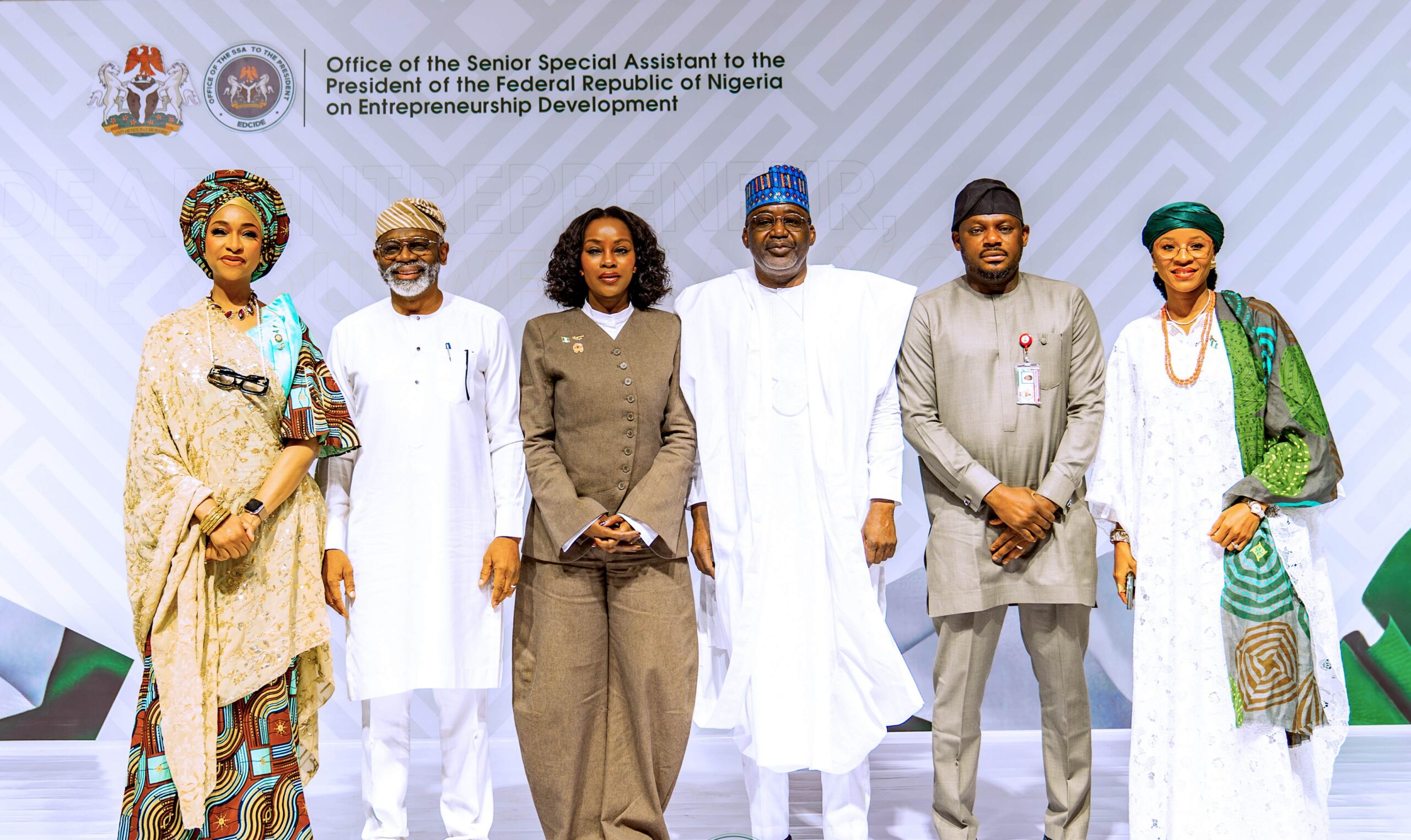
The event, convened by the Office of the Senior Special Assistant to the President on Entrepreneurship Development, led by Chalya Shagaya, the inaugural engagement—aptly themed “Hustle Meets Policy” — was more than a policy event.
It was a deliberate intervention aimed at correcting what insiders described as a long-standing structural disconnect between policymakers and the entrepreneurs who navigate Nigeria’s complex business terrain daily.
The event featured the official launch of the Renewed Hope Enterprise Bridge Initiative, a digital and institutional platform designed to facilitate continuous engagement between the government and the private sector.
While declaring the initiative open on behalf of the President Bola Ahmed Tinubu, his Chief of Staff, Femi Gbajabiamila, struck a tone that was unusually reflective for a government event.
He acknowledged, without equivocation, that policy formulation in Nigeria has often occurred in isolation from the lived realities of entrepreneurs.
“One side works with frameworks and projections; the other works with immediacy and risk. Bringing both into the same room is not symbolic—it is necessary.”
This framing became the philosophical backbone of the initiative: policy must be informed by lived experience, and enterprise must be supported by responsive governance.
The Enterprise Bridge Initiative itself emerged from an earlier engagement process the office where entrepreneurs submitted real-time feedback via a digital platform highlighting persistent barriers such as access to finance, infrastructure deficits, regulatory bottlenecks, and scaling challenges.
Rather than allowing those inputs to dissipate into bureaucratic inertia, the Presidency has now attempted to institutionalise the feedback loop.
In her opening remarks, Shagaya grounded the conversation in both policy and personal experience.
She spoke not as a government official alone, but as a former entrepreneur who had faced the harsh realities of Nigeria’s business environment, from shutting down a fashion venture due to production costs to abandoning an agricultural enterprise due to insecurity in Plateau State.
Her message to participants was direct: the government sees and hears entrepreneurs—but expects resilience in return.
“If we are to achieve a trillion-dollar economy, entrepreneurs must be at the centre of the conversation—consistently, deliberately, and meaningfully.”
Her framing of “hustle” as a lived, daily struggle not an abstract concept but resonated strongly across sessions.
One of the most intellectually compelling segments came from Hannatu Musa Musawa, the Minister of Creative Economy, whose intervention elevated the conversation beyond traditional SME discourse.
Drawing comparisons with countries like South Korea, Musawa argued that Nigeria’s creative and cultural industries are under-optimised economic assets, not merely platforms for expression.
She emphasized that while Nigeria already possesses a vibrant creative sector, the absence of structured policy frameworks has limited its economic potential.
“You cannot build a beautiful house and paint it when you don’t have the proper structure in place.”
Her argument was on deliberate investment, policy incentives, and institutional support similar to global creative economies, thus, could transform culture into a primary driver of GDP growth, job creation, and international influence.
More strategically, she positioned the creative economy as a tool of soft power, capable of reshaping Nigeria’s global narrative while generating exportable value.
Beyond rhetoric, the most tangible outcome of the event was the unveiling of the Enterprise Bridge digital platform.
The platform is designed, according to Shagaya, to aggregate entrepreneurial feedback at scale, enable real-time policy engagement, provide structured channels for funding and regulatory support, and sustain dialogue beyond one-off events.
This reflects a shift from episodic stakeholder consultations to continuous governance interaction, a model more aligned with modern policy ecosystems.
The first Panel of discussion: Entrepreneurship Under Pressure was moderated by Japheth Omojuwa, it examined the realities of operating businesses under Nigeria’s infrastructural constraints and global economic pressures.
Participants—including Tola Adekunle Johnson, Special Assistant in the Office of the Vice President on SMEs and Job Creation; Oswald Guobadia, Managing Partner at DigitA; and Oladimeji Edwards, Founder and Chief Executive of Hyde Energy Group repeatedly returned to one central issue: power supply.
Folake Soetan, CEO of Ikeja Electric, emphasized that energy reliability remains the single most critical determinant of enterprise productivity in Nigeria. The discussion also highlighted how global disruptions, particularly currency volatility and supply chain shocks—continue to compound domestic inefficiencies. The consensus was that without decisive action on infrastructure, especially power, policy reforms will remain largely theoretical.
The second panel, moderated by Lara Kayode, focused squarely on financing as a critical bottleneck to enterprise growth in Nigeria. Contributors, including Oluwatoyin Ahmed Edu of Bank of Industry and Ladi Balogun GCEO FCMB/Credit Direct (through Uzowuru Emeka) highlighted a persistent structural gap: while capital exists within the financial system, it is often inaccessible to the majority of entrepreneurs due to strict lending conditions and risk-averse frameworks.
From the banking perspective, issues such as weak financial documentation, lack of credit history, and poor corporate structures continue to limit SME access to loans. This has created a disconnect where many viable businesses are unable to secure funding, not necessarily because they lack potential, but because they fail to meet formal financial requirements imposed by institutions.
Offering a practical industry view, Audu Maikori Founder, Chocolate City
stressed that many modern businesses particularly in the creative and digital sectors—operate on intangible assets like intellectual property and brand value, which traditional financing models struggle to recognize. Similarly, Aisha Adamu Augie, Director-General, Center For Black and African Arts & Civilisation (CBAAC) pointed out that the creative sector remains significantly underfunded despite its economic potential, largely due to outdated valuation systems and policy gaps.
Additionally, the discussant not only pointed out the availability but about structure and trust. Panelists agreed that financial systems must evolve to accommodate innovation, improve inclusivity, and bridge the trust deficit between lenders and entrepreneurs—otherwise, Nigeria’s growing digital and entrepreneurial economy will continue to face constraints in scaling sustainably.
The final panel turned attention to production, distribution, and national competitiveness areas widely regarded as Nigeria’s weakest economic links. Featuring voices such as Anysie Ishimwe, Lead for Strategic Partnerships and Community Growth at Africa’s Business Heroes; Derek Ewelukwa, MD/CEO of Jet Motors Company; May Ikeora-Amamgbo; Tola Odeyemi; and Jubril Enakele, the discussion highlighted the operational realities of scaling businesses in Nigeria.
Across logistics, manufacturing, and enterprise development, panelists stressed that growth in Nigeria is often constrained not by lack of ambition, but by systemic inefficiencies ranging from weak transport networks and distribution bottlenecks to limited industrial infrastructure. Rather than benefiting from coordinated systems, many businesses are forced to build workarounds, increasing costs and reducing competitiveness.
The diversity of perspectives reinforced a central conclusion: Nigeria does not lack entrepreneurial drive or innovation—it lacks the integrated infrastructure and policy alignment required to support scale. Without deliberate investments in logistics, production ecosystems, and national distribution frameworks, even the most promising enterprises struggle to expand beyond limited markets.
Meanwhile, the strong intervention from Tola Odeyemi, Postmaster General of NIPOST, who outlined ongoing reforms within the postal and logistics ecosystem aimed at addressing distribution challenges faced by Nigerian entrepreneurs. She emphasized that NIPOST is repositioning itself beyond traditional mail services into a modern logistics and e-commerce enabler, with a focus on improving last-mile delivery, streamlining parcel movement, and supporting small businesses to reach wider markets.
Odeyemi further noted that NIPOST has established partnerships across several African countries to facilitate cross-border trade, making it easier for Nigerian entrepreneurs to access regional markets. According to her, these collaborations are designed to reduce logistical barriers, lower costs, and improve delivery timelines—key factors that have historically limited the ability of local businesses to scale beyond domestic borders.
Entrepreneurs are less interested in dialogue than in outcomes: improved power supply, easier access to credit, reduced regulatory friction, and safer operating environments
Although the Enterprise Bridge Initiative introduces elements such as institutionalised engagement, presidential backing, and a framework for integrating feedback into policy, skepticism remains. For most entrepreneurs, the real measure of success will not be continued dialogue, but tangible outcomes—reliable power, accessible financing, reduced regulatory friction, and a more secure operating environment.
What this event ultimately represents is a broader shift in how the Nigerian government is attempting to position entrepreneurship within national development strategy.
Rather than treating SMEs as peripheral actors, the administration is framing them as central to achieving its trillion-dollar economy target.
The logic is straightforward: entrepreneurs drive job creation; innovation fuels competitiveness; and private enterprise sustains economic growth.
Yet, beyond the speeches and policy framing, the platform also functioned as a practical marketplace of ideas and opportunities—creating space for entrepreneurs to network, build partnerships, and directly engage with funding institutions and venture support organisations present at the event.
For many participants, this immediate access to potential financiers and collaborators was as significant as the policy conversations themselves.
Kabir Abdulsalam writes from Abuja, can be reached via: [email protected]