

Mali’s Fire and the Warning Signs at Nigeria’s Doorstep
By Kabir Abdulsalam,
I had just returned from Kaduna, where Governor Senator Uba Sani hosted the 2026 Nigerian Public Relations Week—an expansive gathering convened by the Nigerian Institute of Public Relations in partnership with the State Government. For a full week, conversations moved between conference halls, side meetings, and informal corridors, all circling on how communication, strategy, and perception can be shape on food security and national stability.
Several panel sessions that went beyond theoretical policy formation into public plates, national security messaging, digital influence, and the role of public relations in building public trust. Government officials, industry leaders, and media practitioners engaged openly, sometimes agreeing, sometimes sharply disagreeing. It was the kind of gathering where ideas are not just shared but tested.
By the weekend, I was back in the newsroom rhythm, easing into preparations for the Monday editorial meeting. While scanning news updates, shaping angles, and settling into a routine weekend life .
I stumbled on the news report of Mali’s defence minister died after an attack on his house. Despite the army fought till second day of battles with jihadist fighters and separatist rebels near the capital Bamako and other cities, putting the Sahel nation’s ruling junta under severe pressure.
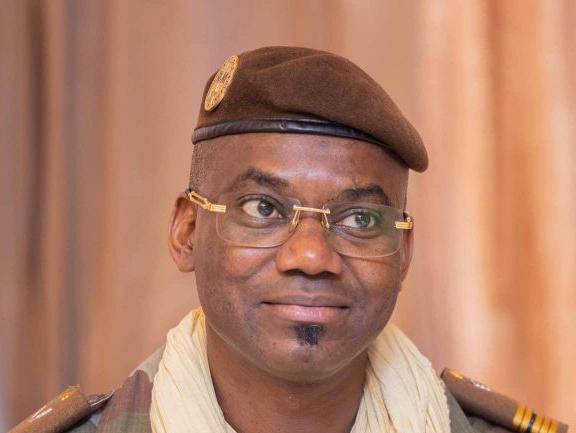
The Defence Minister Sadio Camara, his second wife and two of his grandchildren died after a car bomb attack on his home in the junta stronghold of Kati, outside Bamako, his family and an official said.
For a moment, it didn’t feel like distant news. It felt close—uncomfortably close.
In Mali, violence has long been part of the national reality. But this was different because the attack happened in not a remote town; it sits just outside Bamako, and hosts key military installations. If such a place can be breached with that level of precision, then the question is no longer whether the state is under pressure but how much longer it can hold.
Even more striking was the situation in Kidal, where Russian-backed forces reportedly negotiated their withdrawal. For a government that shifted away from Western allies and leaned heavily on external military support.
This is where Mali’s crisis stops being just Mali’s problem.
The breakdown we are seeing today did not happen overnight. It is closely tied to Mali’s rupture with ECOWAS following a series of military coups that disrupted its democratic transition in May 2021, when Colonel Assimi Goïta ousted the interim civilian president and prime minister, following a previous coup he led in August 2020. What began as a political disagreement has now evolved into a wider security crisis.
ECOWAS responded with sanctions and diplomatic pressure. But those tools struggled to match the new realities in the Sahel. Mali, alongside Niger and Burkina Faso, moved away from the bloc and leaned toward alternative alliances. Thus, consequently, exposed the region to now less coordinated, less predictable.
There is a temptation to see this as purely Mali’s internal struggle. That would be a mistake.
For Nigeria, the warning signs are already visible—and they are not new. The Sahel has never been sealed by any real barrier. The same networks that move weapons, fighters, and extremist ideology across Mali do not recognise national borders. What weakens Mali today has a way of echoing across the region tomorrow.
We have seen this pattern before.
After the fall of Muammar Gaddafi in 2011, Libya collapsed into chaos, and with it came a flood of arms and trained fighters moving southward into the Sahel. That single event reshaped the region’s security landscape. Weapons that once sat in Libyan stockpiles found their way into the hands of insurgents across West Africa. Groups became more sophisticated, more mobile, and far more dangerous.
Nigeria is still dealing with the consequences of that fallout today.
From the rise in insurgent capability in the North-East to the spread of armed groups across the North-West and North-Central, the link is difficult to ignore. The country’s porous borders—stretching across vast, under-governed terrain—have made it easier for these threats to seep in, settle, and evolve.
That is why Mali’s current crisis cannot be dismissed as distant instability.
If insurgent groups succeed in expanding their control in Mali—if they consolidate territory and gain unrestricted movement—the implications for West Africa will be severe. It would not just mean another troubled state; it would mean the emergence of a dangerous operational base, much like post-Gaddafi Libya, from which violence can be projected across borders.
Similarly, another concern that is often less visible but just as important is the slow weakening of democratic norms.
Mali’s prolonged military rule, like similar trends in parts of the Sahel, reflects a growing acceptance of governance outside constitutional processes. Each delayed transition, each consolidation of junta power under security justification, sets a precedent. Over time, those precedents begin to harden into patterns.
There are lessons here, and they are not abstract.
First, West African states cannot afford to act alone in matters of security. The idea that any country can isolate itself, reject regional frameworks, and still effectively manage transnational threats is increasingly unrealistic. Mali’s experience makes that clear.
Second, external security partnerships—whether Western or non-Western cannot replace regional cooperation. They may support efforts, but they cannot substitute for collective strategy and trust within the region. When those external interests shift, the burden always returns home.
And for Nigeria, perhaps the most immediate lesson lies at its borders.
Border security can no longer be treated as routine administration. It must be strategic. Intelligence sharing, surveillance, and community engagement are now essential tools, not optional ones. The evolving threats in the Sahel demand a coordinated and forward-looking response.
Security is not only about force. It is also about legitimacy. Governments that enjoy public trust are better able to mobilize citizens against threats. Those that do not, no matter how heavily armed, often struggle to hold ground.
As I reflect on that moment—scrolling through my phone and reading about the attack in Kati—I am reminded how quickly distant crises can feel close.
Mali may be the centre of the storm today, but the fault lines stretch much wider.
West Africa stands at a delicate point. The choices made now—by governments, by regional institutions, and by citizens will shape not just one country’s future, but the stability of the entire region.
And if there is one lesson from Mali’s crisis, it is simple: when one part of the region burns, the heat never stays contained for long.
Kabir Abdulsalam, a political analyst based in Abuja, can be reached at [email protected].