
MBS’ masterplan to reopen Strait of Hormuz: How Saudi Crown Prince played key role in Lebanon ceasefire? Read the inside story

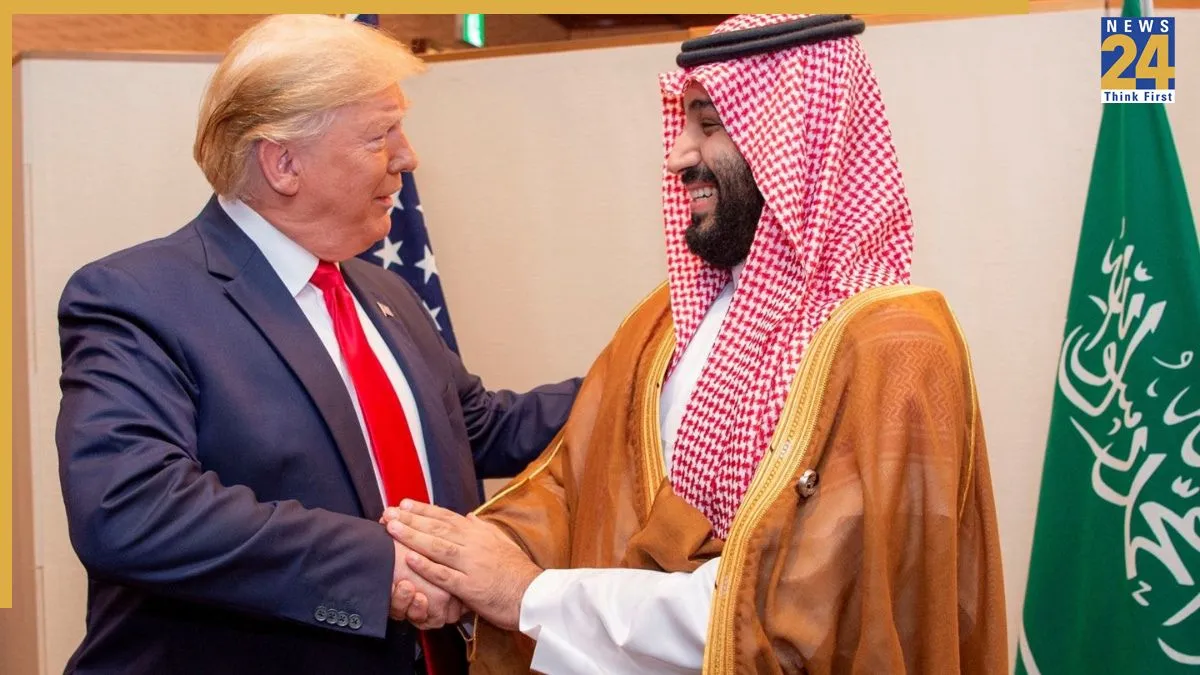
While the Lebanon ceasefire appears to be a wholly US initiative and a major diplomatic success for President Donald Trump, its believed that Saudi Arabia Crown Prince Mohammed bin Salman is the key figure behind deal.
How MBS convinced Trump for Lebanon ceasefire?
According to a report, MBS told Trump in a private phone call that a ceasefire in Lebanon is essential for advancing negotiations with Iran to bring stability in the region and reopen the Strait of Hormuz.
During the phone call, Mohammed bin Salman reportedly pressured Trump to accept Iran’s conditions, stressing that a ceasefire and lasting peace in the Middle East can only materialise if Israeli attacks in Lebanon stopped.
Following the phone conversation with MBS, Trump persuaded Netanyahu to agree to a 10-day ceasefire in Lebanon, MEE reported.
Why Saudi pushed for Lebanon ceasefire?
Around one-fifth of the world’s oil and gas supplies flow through Hormuz, and its prolonged closure could essentially cripple the oil-based economies of Gulf states. This realisation prompted Saudi Arabia to shift its strategy from a potential confrontation with Iran to diplomacy, Middle East Eye reported.
As per the MEE report, citing Western and Arab officials, Saudi lobbying played a vital role in bringing about the 10-day Lebanon ceasefire announced by Trump, though it remains unclear whether Israel will fully comply with the agreement, and how much pressure Trump will be able to exert on Israeli Prime Minister Benjamin Netanyahu.
Did Pakistan play a role, and why Iran’s stance became key?
Iran’s unwavering stance also played a critical role as Tehran maintained that no concrete negotiations would take place with Washington until Israeli aggression in Lebanon was halted. Iran-backed Hezbollah is a key part of the equation, hence a ceasefire in Lebanon became a necessary step for US-Iran talks, the report said.
Notably, Pakistan has emerged as a key player in this diplomatic game, with Islamabad emerging as the preferred venue for Iran-US peace talks. However, geopolitical experts believe that Pakistan did not and could not have single-handedly played such a role, and has been backed by Riyadh, both diplomatically and financially.
What is Saudi Arabia’s diplomatic game?
Experts have described Saudi Arabia’s diplomatic strategy as a “double game”, which involves maintaining pressure on its longtime regional rival Iran with help of the US, including allowing the US forces to use Saudi airbases.
However, Riyadh is also making diplomatic efforts to de-escalate tensions and restore peace in the region as it has realised the prolonged conflict and the blockade of Strait of Hormuz could devastate regional economies.
As per the MEE report, Western officials believe Saudi Arabia does not want the conflict to escalate, because it fears that its oil export supply chain, including the East-West Pipeline, which allows it to bypass Hormuz, could also come under attack if war escalates.
Riyadh also fears that Tehran-backed Houthis in Yemen could blockade the Bab al-Mandeb, another vital chokepoint, creating more pressure on Saudi’s oil-based economy.