

Media Tour: What Kaduna Revealed to Us at NPRW 2026
By Ilyasu Bature
As a journalist on the media tour accompanying delegates to the 2026 Nigerian Public Relations Week (NPRW) in Kaduna, I arrived with a familiar set of assumptions—many shaped by headlines, security briefings, and the dominant national narrative about the state. What I encountered, however, was far more layered, and in some respects, surprisingly instructive.
Organised by the (NIPR), the media tour was not merely a ceremonial add-on to the conference. It was a deliberate attempt to bridge perception and reality—to allow communication professionals and journalists to see, interrogate, and assess governance claims firsthand.
At the centre of this experience was Kaduna’s Command and Control Centre—arguably the most symbolic representation of the state’s evolving security architecture.
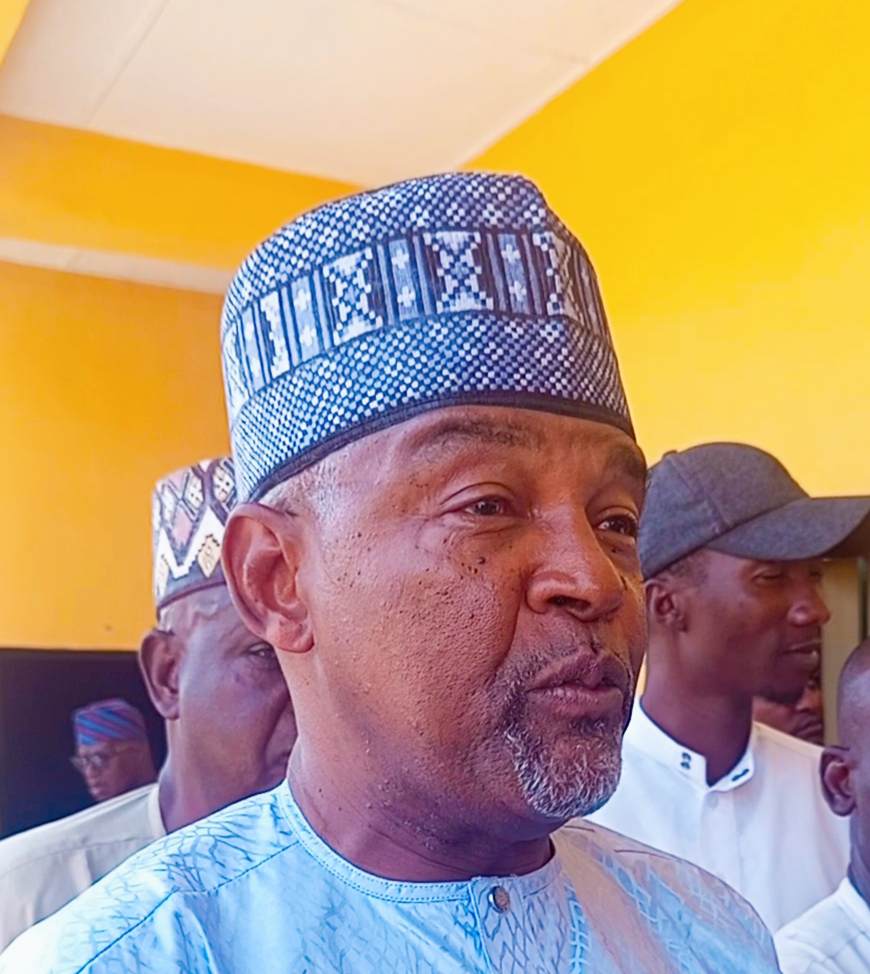
Leading the delegation, Chairman of the NPRW 2026 Planning Committee, , did not shy away from acknowledging the elephant in the room. Kaduna, like many parts of Nigeria, has faced significant security challenges. Yet, his observation after the tour was both measured and revealing: the reality on the ground, he suggested, is not as dire as often portrayed.
That statement is not a dismissal of the state’s challenges—it is a call for nuance.
Inside the Command and Control Centre, the technical backbone of Kaduna’s security strategy came into sharp focus. According to the Head of ICT, Musa Luka, the state has deployed over 228 CCTV cameras across approximately 120 strategic locations, supported by more than 40 kilometres of fibre optic infrastructure. The system integrates Automatic Number Plate Recognition at key entry points such as Rigachikun and Abuja Junction, alongside advanced surveillance tools like Pan-Tilt-Zoom cameras and Geographic Information Systems.
In practical terms, this translates into real-time situational awareness, faster response times, and improved protection of critical infrastructure—including schools and public institutions.
For a state often defined by security anxieties, this investment signals a shift toward intelligence-led governance. But as I observed, infrastructure alone does not change perception—communication does.
Badejo-Okusanya’s advice to the Kaduna State Government was therefore as strategic as it was simple: tell your story better. Development that is not communicated risks remaining invisible, and in a media environment driven by crisis narratives, silence can be misinterpreted as absence of progress.
Beyond security, the tour extended into sectors that reveal the broader logic of governance—education and human capital development.
At the Kaduna State Institute of Vocational Training and Skills Development, the Provost, Husaini Haruna Muhammad, offered insight into a model that prioritises practical competence over theoretical knowledge. With centres in Soba and Samaru Kataf, the institute has already enrolled over 4,000 trainees across 14 trade programmes, with an ambitious projection to graduate more than 30,000 annually.
What stood out was not just the scale, but the philosophy. Training here is hands-on, competency-driven, and aligned with the National Skills Qualification Framework—ensuring that graduates are not just certified, but employable.
This approach reflects a broader shift in governance thinking: that education must respond to labour market realities, not merely academic tradition.
A similar pattern emerged at Government Secondary School, Nasarawan Rigachikun, where ongoing reforms in the education sector were outlined by Permanent Secretary Rabi’u Yunusa.
Over 100 schools are undergoing renovation and reconstruction, with 62 already completed and dozens more nearing completion under a phased, World Bank-supported programme.
In a state with over 800 secondary schools and thousands of primary institutions, the scale of intervention is significant. Yet, as with security, the real test lies not only in infrastructure, but in sustainability and impact.
What becomes evident from this media tour is that Kaduna’s governance approach is increasingly holistic. Security investments are being complemented by education reforms and skills development initiatives—an attempt to address both immediate threats and long-term socio-economic vulnerabilities.
But there is a deeper lesson here—one that extends beyond Kaduna.
The NPRW theme itself—focused on food security and the role of public relations—finds practical expression in these projects. Whether it is protecting farmers through improved security, equipping youths with employable skills, or rebuilding schools, the underlying question remains the same: how do governments translate policy into lived reality?
Communication is central to that process.
Yet, it must be said clearly: communication cannot substitute performance. It can amplify, explain, and build trust—but it cannot mask gaps in delivery. Citizens ultimately judge governance not by press releases or facility tours, but by whether their lives improve.
For journalists, this raises an equally important responsibility.
We must move beyond the binary of praise or criticism. The task is to interrogate, contextualise, and present a balanced narrative—one that acknowledges progress without ignoring gaps. Kaduna’s story, as I witnessed it, is neither perfect nor hopeless. It is a work in progress.
And perhaps that is the most honest story to tell.
As NPRW 2026 unfolds, Kaduna offers a case study in how communication, when aligned with governance, can reshape perception. But it also serves as a reminder that perception must ultimately be anchored in reality.
In the end, the true measure of these efforts will not be what delegates saw during a guided tour, but what citizens experience long after the cameras are gone.
Ilyasu Bature, a photo journalist and communication student writes from Abuja
[email protected]