

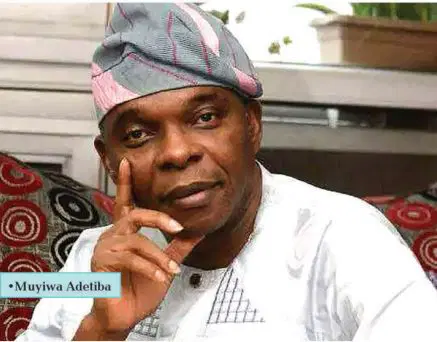
A young man and his partner came to see me for a possible interview a couple of weeks ago. They own a Public Relations outfit together. According to them, an encounter with some mass communication undergraduates made them realise ‘something’ was missing in the education of these young students. They decided to introduce some ‘doyens’ of the pen profession to them to fill their perceived void. I was one of those chosen.
I avoid interviews unfortunately. I know too much of the tricks and power of an interviewer to willingly submit myself to one. But they got a trusted friend and colleague of almost five decades to speak to me on their behalf. This gave me no choice but to accept. Besides, I knew I was also securing an I.O.U. from my friend. Incidentally, they wanted to know about my past interviews, the personalities I had met and how I ‘navigated around’ tough interviews. Specifically, they asked me about some of today’s young interviewers who are controlling the airwaves and how I rated their styles.
For the records, I do not believe there is a ‘right’ or wrong’ style as long as it is civil. Success often depends on how much the interviewer knows about the interviewee – their personality, mood, strength, weakness. And history. In other words, how much ‘homework’ has been done as there is a bit of psychology involved in fielding questions – a wrong question at the wrong time will give you a less than satisfactory response – and even the choice of location. It is more of an advantage for example, if someone comes to your turf for an interview than if you go to theirs. Dressing ‘right’ might also be an advantage as it can sometimes ‘break the ice’.
The second area they were interested in was a bit more intricate. They felt the students were apprehensive about the future of the profession and wanted veterans who ‘had been there, done it’ to assure them. For starters, journalism has changed so much over the years, that I already feel like a dinosaur. There are aspects to the profession that I no longer recognize. We can however, say the same of many professions with the advent of technology and AI. The future is therefore, difficult to see let alone to assure anyone of it. The only assurance I can give is that whoever is diligent and good at what they do; whoever can anticipate and navigate through changes, will almost always succeed.
But what is success? Over the years, many young people have come to me feeling like a failure. I can’t recount the number of times I have heard comments like ‘my father was already a director of a multi-national by the time he was my age’. Or ‘my father built a house at my age’. Or ‘my parents could afford foreign education for me and my siblings. I can’t do the same for my children’. For some, it is about their parents. For others, it is about their more successful peers. But it is almost always about where they think they should be. It is almost always about societal standings, justified in the main, by material acquisitions.
I have spent time telling them there is more to life than acquiring wealth. And that there is in fact, something wrong with people who acquire wealth for the sake of it. They tell me in turn that money is the language of the modern world. That money brings respect and societal acceptance. They tell me how nice it would be to own this or that luxury item and be able to fly First Class to exotic places in the world. As if Elon Musk who has these things at his beck and call can be said to be the happiest man in the world on account of them. We are in a world where we yearn for more and more. A world where more unfortunately, means less because of the emptiness it brings. It is the paradox of the modern world.
Sponsored
For me, true fulfillment is not about comparing oneself with others. Each human being is unique with unique sets of talents. It is also not about who has the biggest Mercedes or the finest house or largest bank account. They are all meaningless after a point. Dangote is not going to eat more than two meals a day at his age. He is not going to sleep on two beds at a time let alone occupy two houses. Many of the things he has are therefore, surplus to requirements. So it is for many of us. Besides, you can’t take anything with you when you die. So there has to be more to life and living.
This, in my opinion, is in looking for a meaning, for a purpose in life. It is, to address the concerns of those mass communication students, in honing a set of skills that can change their world and make it a better place. But it starts with your little corner. It starts with self-awareness. Hilary Clinton put it rather succinctly in one of her biographies when she talked about looking for ‘a purpose that is bigger than yourself’. There has to be something other than the material things the world provides if life is to be truly meaningful. It is in finding that purpose that we find fulfillment. And success. And joy. Life ends so quickly that many of the things we spend most of life chasing become meaningless at the point of death. Sometimes, even long before death. My advice to the young is to do things that will make them want to get up excited in the morning and go to bed fulfilled. It is to find their ‘happy place’.
I will end with a rather quaint story I read recently. It is about a caterpillar who crawled up a painted stick in search of a juicy twig only to retrace its steps at the end. The story ends by asking how many painted sticks of wealth, power, pleasure and fame have we all climbed only to be disappointed at the end? There is a lot of emptiness in the hearts of so called wealthy people that we can’t see. Many carry loads that are invincible to us.
Many of them would retrace their steps like that caterpillar on the painted stick and opt for a different path if they had the chance to live their lives again. Many sacrificed health and some, their souls, on the altar of fame and power. Speaking of interviews, I recall my interview with B.C Lee, founder of The Samsung Group who told me pointedly that he would choose a different path if he had to do it all over again. He was the richest man in South-East Asia and one of the richest in the world at the time. Many of these people we envy want to laugh, truly laugh again, but can’t. All that glitters, they say, is not gold.
SPONSORED