

Revisiting the Malian Attacks and Their Implications for Nigeria By Samuel Aruwan
While traveling between Kaduna, Jos and Kafanchan on Saturday, April 25, 2026, where I spent the night, I followed developments in Mali closely. My keen interest in the unfolding events was shaped by my background as a student of conflict sensitive reporting, which has taught me to pay attention not only to attacks themselves, but also to the statements, signals and patterns that emerge in their aftermath. Reports of coordinated attacks across several locations were troubling enough. As the day progressed, three separate statements emerged, one from ‘Jama’at Nasr al Islam wal Muslimin’, known as JNIM, another from the ‘Azawad Liberation Front’, the FLA, and a third from the Malian Transitional Government.
Taken together, those statements reveal important signals about the changing security landscape in the Sahel and offer lessons Nigeria should not ignore.
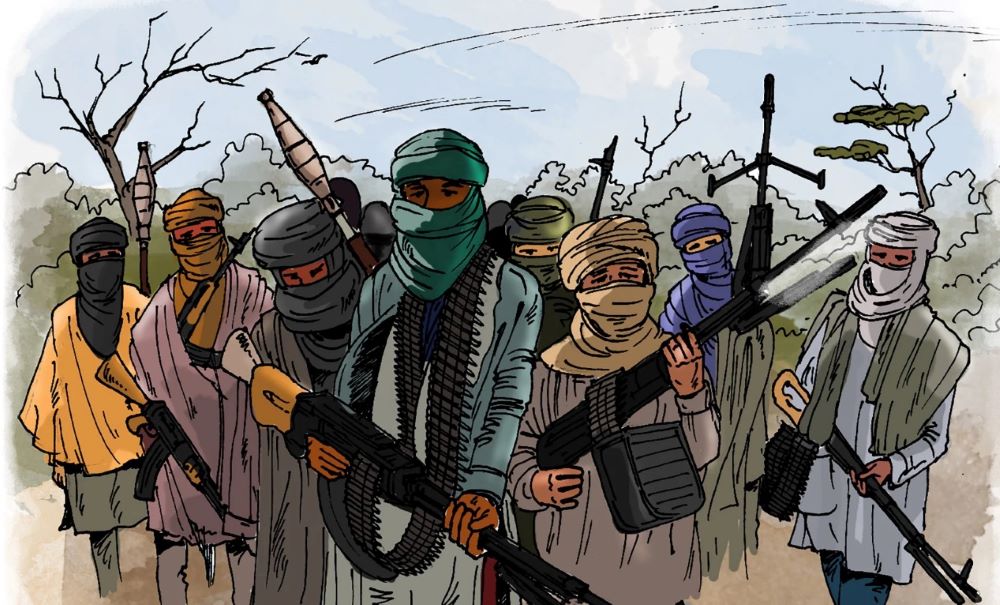
The first statement came from JNIM, which openly claimed responsibility for the attacks and publicly acknowledged working with the ‘Azawad Liberation Front’. It said its fighters targeted the Presidency in Koulouba, the Ministry of Defence, Modibo Keita International Airport in Bamako, and military positions in Kati. It also claimed battlefield gains in Mopti, Sevare, Gao and Kidal, describing the Kidal operation as one carried out with the participation of its partners in the ‘Azawad Liberation Front’.
That language deserves close attention. Armed groups do not casually describe one another as partners, especially when they come from different ideological traditions. The choice of words suggests growing cooperation built around shared strategic interests.
The FLA’s own statement removed any uncertainty. It declared that its forces had taken control of Kidal and openly stated that the operation was carried out in partnership with JNIM. It also acknowledged participation in attacks against military positions in Gao under the same coordination.
This was a direct admission of operational cooperation.
The FLA framed its campaign as a struggle for territorial liberation. It accused the Malian military and Russian forces of worsening civilian suffering and called for international political and humanitarian intervention. In doing so, it sought to place its military operations within a wider political contest over the future of Bamako.
Then came the Malian Government’s statement, delivered by Brigadier General Issa Ousmane Coulibaly, Minister of Territorial Administration and Decentralization. The government confirmed that armed terrorist groups carried out complex and coordinated attacks against Kati, Sevare, Gao, Kidal and Bamako, resulting in casualties and injuries, while insisting the attacks were contained and the situation brought under control.
One phrase stands out, complex and coordinated attacks.
That admission points to planning, synchronized movement, communication networks and operational discipline. It suggests armed groups that are learning, adapting and becoming more capable of carrying out simultaneous attacks over wide distances.
The pattern is not entirely unfamiliar. On the night of January 28 into January 29, 2026, armed fighters launched a coordinated assault on Diori Hamani International Airport in Niamey and the adjoining Air Base 101, targeting strategic military assets and critical infrastructure. Similar patterns have also been attempted in Nigeria, including terrorist attacks on military positions in Mallam Fatori.
The difference in Mallam Fatori was the response. Nigerian troops mounted a coordinated and overwhelming counter offensive, neutralised dozens of terrorists, recovered arms and valuable operational enablers, and denied the attackers the momentum they sought. That outcome shows the value of preparedness, sound intelligence, rapid coordination and sustained pressure.
Success in places such as Mallam Fatori must not be treated as an endpoint. It must be consolidated, a point I have consistently made, including in my earlier article, “Nigeria’s Military Victory in Mallam Fatori and the Imperative of Consolidation”.
Recent warnings closer to home make that even more necessary. On April 16, 2026, Premium Times, quoting a leaked internal security memo, reported that terrorist groups were working together and plotting attacks on critical infrastructure between Abuja and neighbouring Niger State. The report drew attention to strategic facilities considered attractive targets because of their symbolic and operational value. I am certain that if there is merit in the leaked memo, Nigeria’s security forces and intelligence agencies will leave nothing to chance.
Read together, events in Mali, Niamey and developments within Nigeria point in one direction. Armed groups across the Sahel are adapting, building links and refining tactics. What is happening across the region is no longer distant from Nigeria’s security reality.
Nigeria has carried a heavy burden in confronting terrorism, and the Armed Forces of Nigeria have made enormous sacrifices in that fight. I speak with conviction on this, having covered conflict as an embedded journalist and later served in public office, accompanying troops to the frontline and witnessing firsthand the courage, discipline and sacrifice that define their service.
That sacrifice must be matched by steady resolve.
Nigeria needs stronger intelligence gathering, tighter border surveillance, closer coordination among security agencies, sustained disruption of illicit arms flows and deeper regional cooperation. Diplomatic differences within West Africa should never weaken collective action against threats that move freely across borders and exploit every gap in coordination.
The warning signs are there. Nigeria must remain vigilant, consolidate recent gains and keep steady pressure on terrorist groups wherever they operate.
Aruwan is a postgraduate student at Ahmadu Bello University, Zaria.