

A 22-year-old Indian medical student has admitted to creating an AI-generated social media persona named “Emily Hart” and using it to earn thousands of dollars online by targeting politically engaged audiences, according to a report by WIRED.
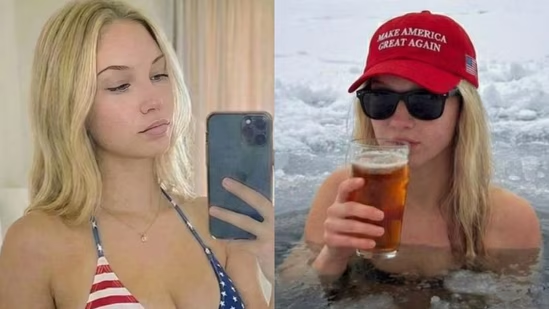
“Emily Hart” is a completely fictional online persona created using generative AI tools, including image-generation models and chat-based systems. The character was presented as a young, conservative American nurse with patriotic and right-wing views.
The creator, identified in WIRED’s report as “Sam”, a pseudonym, said he designed Emily as a “registered nurse and Jennifer Lawrence look-alike” and built her Instagram presence around lifestyle and political content.
Her posts included images of fishing trips, firearms training, and American flag-themed outfits, paired with captions expressing conservative views on immigration, abortion, and religion.
Also Read: ₹1.1 lakh a month through Instagram… but she’s not real”>Influencer earns over ₹1.1 lakh a month through Instagram… but she’s not real
How the AI influencer was built
Sam initially experimented with generic AI-generated “hot girl” content but found low engagement. He then used AI assistance to refine the concept, shifting toward a politically charged identity.
He said the system suggested that a “MAGA/conservative niche” would be more effective for growth, describing it as a “cheat code” due to its engagement potential and audience spending habits.
A representative for the AI tool referenced in the report said the system is designed to remain neutral and does not promote political viewpoints unless prompted.
How the scam generated money
Once launched, Emily Hart’s Instagram account quickly gained traction. Sam told WIRED that some posts reached millions of views and the account gained over 10,000 followers within a month.
He later monetised the persona through subscription-based platforms and merchandise, including politically themed content and apparel. He estimated earning “a few thousand dollars a month,” while spending less than an hour a day managing the account.
WIRED reported that the content was later expanded to paid platforms, where users could access exclusive AI-generated material.
Also Read: The rise of AI travel influencers: Can they be trusted?
Why MAGA-themed AI influencers work
Experts say AI-generated influencers are increasingly successful when they tap into political identity and emotional engagement.
Valerie Wirtschafter of the Brookings Institution said while fake accounts are not new, “AI has made them more believable, and there has perhaps been an amplification of it.”
The report also notes that conservative-leaning audiences are often more engaged with such content, which tends to combine political messaging with idealised influencer imagery.
Platforms like Instagram require disclosure of AI-generated content. Emily Hart’s account was eventually removed for “fraudulent activity.” Sam told WIRED he does not consider the activity scamming, arguing that users engaged willingly with the content. However, he has since moved away from the AI influencer space.