

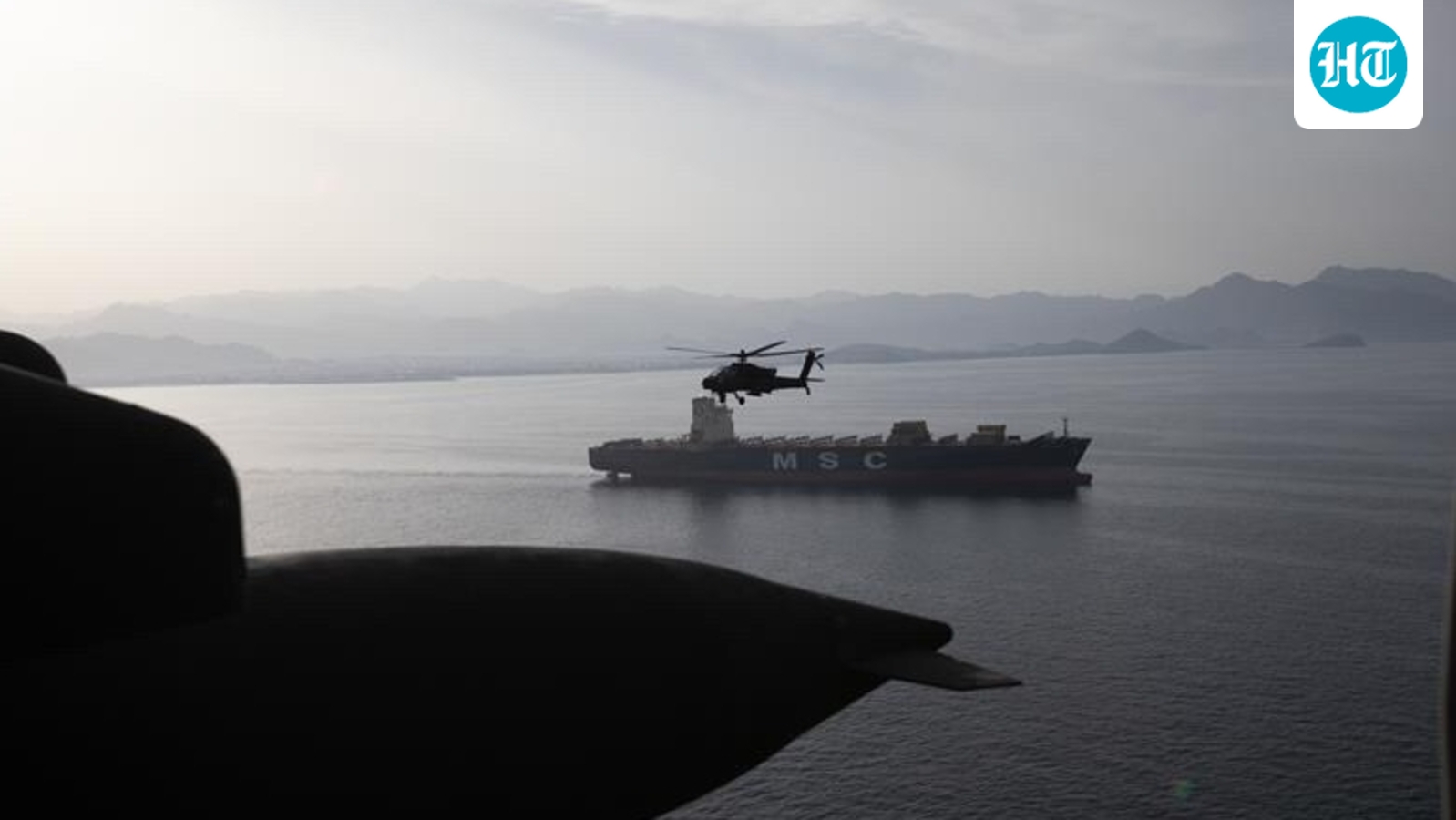
15 warships implementing the blockade
The US has deployed more than 15 warships to stop vessels trying to enter or leave Iranian ports, the Wall Street Journal has reported. These warships can launch troops and helicopters to go take control of a ship. They can also drive up alongside vessels and force them to go wherever they want.
These warships are operating outside the Persian Gulf to avoid the risk of going near Iran’s coastline, where they will be vulnerable to attack from drones and missiles. According to the US Department of War, the warships are positioned in the Gulf of Oman and in the Arabian Sea region.
Enforcement authority is not confined to waters near Iran — vessels could be boarded far from the Persian Gulf — even in distant international waters such as the Indian Ocean or Pacific Ocean.
A precedent for this approach emerged during the US naval blockade of sanctioned vessels trading with Venezuela, launched in December 2025. In that campaign, several tankers attempted to evade enforcement by fleeing the Caribbean, only to be tracked across oceans and seized thousands of kilometres away. US forces boarded multiple Venezuela-linked oil tankers in the Indian Ocean after pursuing them from Venezuelan waters, demonstrating that sanctions enforcement could extend well beyond the immediate blockade zone. A look at those operations offer clues as to how the US can implement its blockade against Iran.
The USS Abraham Lincoln aircraft carrier, which is in the Arabian Sea, has a large flight deck that can be used to conduct aerial boardings, similar to how the USS Gerald R Ford aircraft carrier was used to launch helicopters to seize tankers near Venezuela.
The USS Tripoli amphibious assault ship is also in the Arabian Sea, and aboard it is a marine unit that is trained to intercept ships. Tripoli also has a large flight deck so it can also deploy teams on helicopters to board hostile vessels, or send out Marine teams on smaller boats.
There are also several guided missile destroyers in the region that have small flight decks that can be used to launch helicopters or boats. The missile destroyers could also be used to sail up to a hostile vessel and marshal them to a specific area and hold them in place.
The US also has other warships and forces in the area, including submarines, details of which have been kept under wraps by the US military for security reasons.
Standard Operating Procedure and legality
Under international maritime law, specifically the United Nations Convention on the Law of the Sea (UNCLOS), any warship can approach a commercial vessel and, under ‘reasonable circumstances’, conduct a ‘right of visit’ boarding to verify nationality, check for illicit activity (piracy, slavery, unauthorised broadcasting) or enforce blockades during wartime. However, this can only be done on the high seas, or international waters.
In the current US blockade of Iranian ports, if any commercial vessel resists or refuses to comply with US orders, then the US warships can send highly trained Marines or special operations forces such as Navy SEALs to conduct a ‘hostile boarding’.
According to the Commander’s Handbook on the Law of Naval Operations, a naval blockade generally follows these steps:
Warning issued: The warship identifies itself, contacts the vessel and orders it to stop.
Ship is boarded: The warship sends a boat with one officer or more to the ship for a visit and search. The officers and boat crew are armed at the discretion of the warship’s commander. If a search at sea isn’t practical, the ship is directed to a neutral area.
Checking papers: Crew are questioned about cargo, route, flag and voyage details.
Search and seizure: If ‘reasonable grounds’ exist the ship is violating the blockade, it may be captured. If it resists capture, it may be attacked.
Ship is detained, rerouted or released: The ship may be diverted, detained, captured or released depending on what’s found and the applicable authority.
If the US starts taking control of tankers, it may need a captain and crew to drive the vessels if the current crew doesn’t comply. The US would also need a place to park the tankers.